This guide covers beginner Pilates ball exercises at home — ten gentle, sequenced moves that build core control, glute strength, and posture in around 20 minutes. It is written for UK home exercisers, desk workers and post-natal returners who want modern, mat-based Pilates without a Reformer studio or a teacher-training background. You will get clear cues, what each move targets, the most common form mistakes, and a tested kit list.
TL;DR
- Ten beginner Pilates ball exercises at home, sequenced warm-up → core → glutes → posture → cooldown.
- You only need an 18–25cm soft Pilates ball, a non-slip mat, and 20 minutes of floor space.
- Modern Pilates is mat-based and beginner-friendly. The NHS lists it among activities that can ease back pain.
- A 2023 meta-analysis of 19 trials (1,108 patients) found Pilates produced a large reduction in chronic low back pain vs. control.
- Aim for 3 short sessions per week. Quality of breath and pelvic position beats reps every time.
- Kit pick: Flexa.fit Pilates Ball (18cm) — £2.99, anti-burst, deflatable for storage.
Who this routine is for
If you are brand new to Pilates, returning after time off, or working around a stiff lower back, a sticky neck or weak glutes from desk work, this is for you. You do not need any previous Pilates experience, you do not need a Reformer, and you do not need to be flexible. Modern Pilates — the kind taught by most UK studios today — is mat-based, scalable, and gentle on joints. It uses a small inflatable ball (sometimes called a Pilates "soft ball" or mini ball) as a feedback tool: it forces your deep core and inner-thigh muscles to switch on, and it teaches your spine where neutral really is.
Pilates is officially recognised by the NHS as a recommended way to keep your back strong and mobile. The NHS Live Well guide lists Pilates alongside yoga as a low-impact way to improve posture, flexibility, balance and core strength — "particularly the abdominal muscles" — and the NHS back pain page specifically names Pilates as an activity that can ease everyday back pain when combined with staying active.
What the research says about Pilates
Pilates is one of the most-studied movement systems for low back pain in the world. Two pieces of evidence are worth knowing before you start.
The Cochrane Database of Systematic Reviews (Yamato et al., 2015) pooled 10 randomised trials and concluded there is "low to moderate quality evidence that Pilates is more effective than minimal intervention for pain and disability" in people with non-specific low back pain. As Cochrane put it:
"Pilates is more effective than minimal intervention for pain and disability."
— Yamato et al., Cochrane Database of Systematic Reviews, 2015
A more recent 2023 systematic review and meta-analysis in the International Journal of Environmental Research and Public Health went further. Pooling 19 trials and 1,108 patients with chronic low back pain, the authors reported a standardised mean difference of −1.31 for pain reduction vs. control — a large effect size in clinical-research terms — and a 4.35-point drop on the Oswestry Disability Index, the gold-standard back-function score used by UK physios.
The Chartered Society of Physiotherapy — the professional body for the UK's 67,000 chartered physios — consistently emphasises that the safest exercise for a healthy back is the one you will keep doing. A 20-minute mat routine you do three times a week beats a 60-minute class you skip half the time.
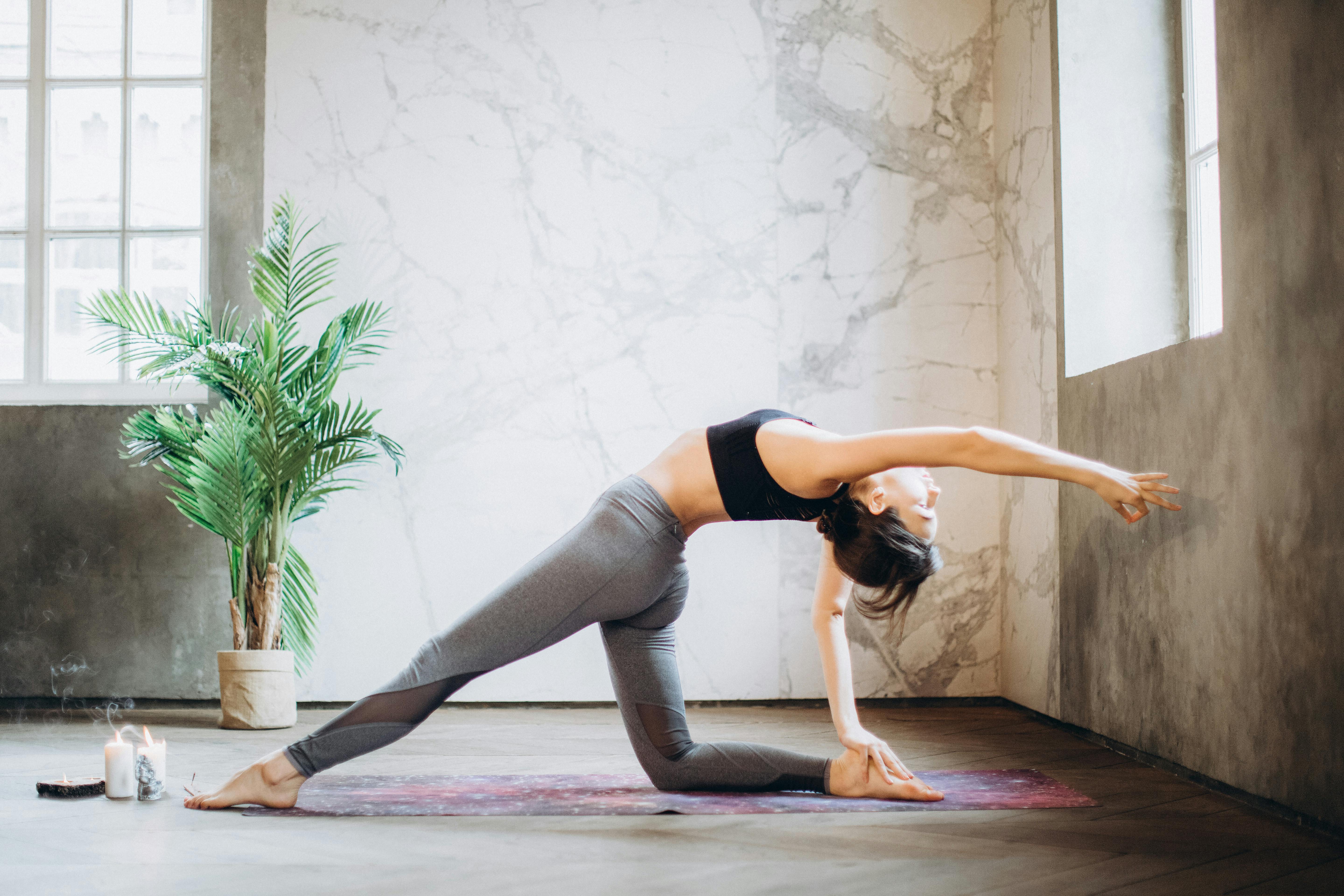
Photo: Anna Shvets via Pexels.
Kit you actually need
You can run this routine on three pieces of kit. None of it needs a subscription, an app, or a studio.
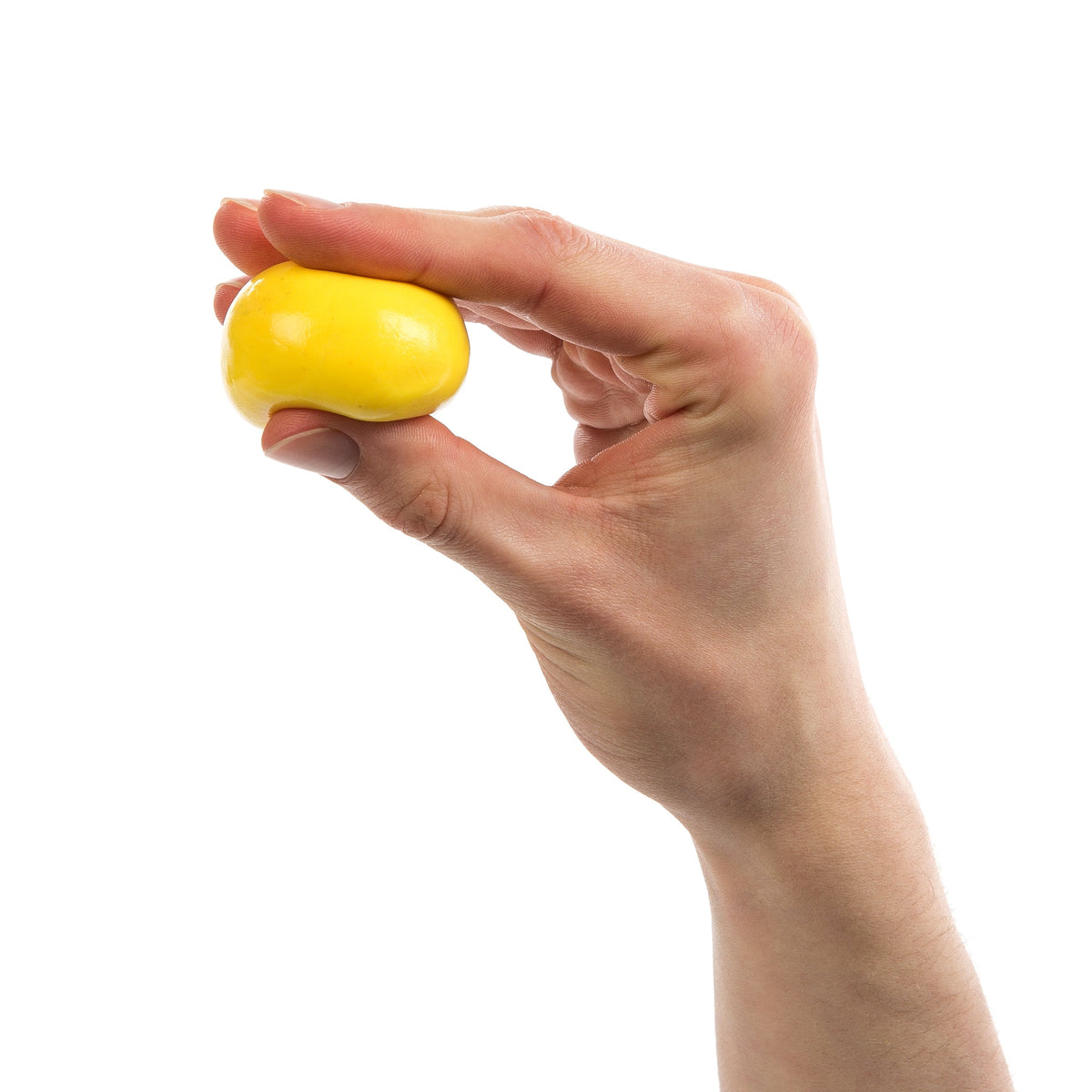
- A soft 18–25cm Pilates ball. Different from a 65cm gym ball — this is the small, deflatable one. We use the Flexa.fit Pilates Ball (18cm): anti-burst, packs flat for storage, £2.99 with 4.64-star average across 28 reviews.
- A non-slip yoga mat. A thicker mat protects your spine on bridges and shoulder bridges. The Flexa.fit Premium Yoga Mat 8mm is the standard pick — physiotherapist-designed, £24.99, free UK standard delivery on orders £30+.
- A foam roller (optional, for cooldown). Useful for releasing tight glutes and upper back after the routine. We use the Flexa.fit Grid Foam Roller (£9.99). For a step-by-step lower-back release, our foam roller exercises for lower back pain guide pairs neatly with this routine.

How to inflate the ball. A soft Pilates ball should give about 30–40% under your bodyweight. If you sit on it and bottom out, it is over-inflated; if your hand sinks in past the knuckles when you press, it is fine. Most beginners over-inflate. A softer ball gives more feedback and is kinder on knees, ankles and pelvis.
How to do this routine
- Frequency. 3× per week, with at least one rest day between sessions.
- Duration. ~20 minutes for the full sequence.
- Reps. 8–10 reps per move for the first 2 weeks. Build to 12–15.
- Breathing. Inhale to prepare, exhale on the effort. Modern Pilates uses lateral-rib breathing — ribs widen sideways, belly stays soft.
- Pelvic position. Aim for "neutral spine" — a small natural curve in your lower back. You should be able to slide a flat hand under your lumbar spine when lying down.
If anything sharp or shooting up the leg appears, stop and check pelvic position before assuming the move is wrong for you. Move 1 below resets that position.
10 beginner Pilates ball exercises at home
The ten beginner Pilates ball exercises at home below are sequenced deliberately: two warm-ups, four core, two glute, one posture move, and a final mobility cooldown. Do them in order — each one wakes up the muscle the next one needs.
1. Pelvic tilts with ball under sacrum (warm-up)
Targets: deep core (transverse abdominis), pelvic-floor awareness, lumbar mobility.
Setup: Lie on your back, knees bent, feet flat hip-width. Place the ball under your sacrum (the flat bone at the base of your spine, not the lower back).
Move: Inhale, tilt the pelvis so the lower back arches gently away from the ball. Exhale, tilt the other way so the lower back presses into the ball. Slow rolls, 10 reps.
Cue: "Tip a bowl of water inside your pelvis — pour towards the belly button, then pour towards the toes."
Common mistake: Lifting the hips off the mat. Keep the bottom heavy — only the pelvis tilts.
2. Ball-assisted spine roll-down (warm-up)
Targets: spinal mobility, hamstring activation, postural awareness.
Setup: Stand tall, feet hip-width, ball held between your hands at chest height.
Move: Inhale to lengthen. Exhale, drop the chin and roll down one vertebra at a time, letting the ball lead the hands towards the floor. Inhale at the bottom; exhale, stack back up.
Cue: "Peel off a wall, vertebra by vertebra."
Common mistake: Hinging from the hips like a deadlift. This is a spine articulation, not a stretch — bend your knees if your hamstrings limit you.
3. Ball squeeze with single-leg slide (core)
Targets: deep core, inner thighs, hip stability.
Setup: Lie on your back, knees bent, feet flat. Place the ball between the inner thighs.
Move: Squeeze the ball gently (about 30% effort). Exhale, slide one heel along the floor until the leg is straight; inhale, slide it back. Alternate legs. 8 each side.
Cue: "Heavy ribcage, light heel."
Common mistake: Letting the lower back arch as the leg slides. If the back lifts, shorten the slide.
4. Dead-bug with ball press (core)
Targets: anti-extension core control — the deep core stability that protects the lower back.
Setup: Lie on your back, hips and knees at 90 degrees ("tabletop"). Hold the ball between your hands and your knees so you are pressing it from both sides.
Move: Press into the ball. Exhale, extend the opposite arm and leg away from each other while the ball stays still. Inhale, return. 8 reps each side.
Cue: "The ball is a glass of water — do not spill it."
Common mistake: Lower back arching off the mat as the leg lowers. Only go as low as your back stays flat-ish.
5. Ball-supported chest lift (core)
Targets: upper abdominals, neck-friendly curl-up.
Setup: Lie on your back, knees bent. Place the ball under the back of your skull, hands lightly cradling it.
Move: Exhale, nod the chin slightly and curl the upper ribs towards the hips. Inhale, lower. 10 reps.
Cue: "Float the head on the ball — the ball does the lifting, your neck stays soft."
Common mistake: Yanking the head forwards. The ball exists precisely to stop that — let it.
6. Ball-pass between hands and feet (core)
Targets: full anterior core, coordination.
Setup: Lie on your back, ball held in both hands above the chest, legs in tabletop.
Move: Exhale, pass the ball from your hands to between your knees. Lower the legs and arms in opposite directions, brushing the floor with the back of your hands. Inhale, return; pass back. 8 passes.
Cue: "Long arms, long legs — lower back glued to the mat."
Common mistake: Going too low. If your back peels off the mat, shorten the range.
7. Glute bridge with ball between knees (glutes)
Targets: glute max, hamstrings, inner thighs.
Setup: Lie on your back, knees bent, feet flat hip-width, ball between your knees.
Move: Exhale, squeeze the ball lightly and lift the hips into a bridge. Pause one breath at the top. Inhale, lower. 10 reps.
Cue: "Drive through the heels — ribs stay heavy, hips lift on a string."
Common mistake: Hyper-extending the lower back at the top. Stop when shoulders, hips and knees form one diagonal line.
8. Single-leg ball bridge (glutes)
Targets: single-leg glute strength, pelvic stability.
Setup: Lie on your back, knees bent. Place one heel on top of the ball, other foot lifted to tabletop.
Move: Exhale, press through the heel on the ball and lift the hips. Hold one breath. Lower with control. 8 each side.
Cue: "Hips stay level — do not let the working side dip."
Common mistake: The ball wobbling away. Slower is harder — do not chase reps.
9. Standing ball-against-wall posture set (posture)
Targets: upper-back postural muscles, scapular control, breathing.
Setup: Stand with your back to a wall, feet 15–20 cm forward of the wall, ball pressed between your upper back (between the shoulder blades) and the wall.
Move: Inhale to lengthen the spine. Exhale, slide down into a quarter-squat — the ball stays pressed and rolls slightly. Slide back up. 10 reps.
Cue: "Long crown, wide collarbones — the ball wakes up the muscles you ignore at your desk."
Common mistake: Tilting the chin up. Keep the back of the head reaching towards the wall — not pressing it.
10. Spine twist over ball (cooldown)
Targets: thoracic-spine rotation, oblique mobility, downshift after the workout.
Setup: Lie on your back, knees bent and stacked over the ball (ball between knees), arms out in a T-shape.
Move: Inhale, lengthen. Exhale, let the knees drop slowly to one side, head turning the opposite way. Inhale at the bottom; exhale, return. 6 each side, slow.
Cue: "Rotate — do not collapse. Both shoulders stay heavy on the mat."
Common mistake: Throwing the legs across. The ball gives you something to control — lower it under tension, not into gravity.
How to progress this routine
For the first two weeks, run all ten moves at the rep counts above, three times a week. From week three:
- Hold each contraction (bridge top, dead-bug position) for one extra breath.
- Build dead-bug, ball-pass and single-leg bridge to 12–15 reps each side.
- Add a second round of the four core moves (3, 4, 5, 6) once a week.
- Pair the routine with a back-friendly mobility session — our yoga poses for lower back pain relief sequence is the natural complement.
If you are exercising around perimenopausal symptoms or returning after a long gap, our perimenopause exercise routine at home uses similar low-impact principles and pairs well with this Pilates ball block.
Safety and when to stop
Pilates is low-impact, but it is still loading your spine and pelvis. Stop and reassess if you feel:
- Sharp, shooting pain (especially down a leg) — not the same as muscular fatigue.
- Numbness or pins-and-needles in the feet or hands.
- Dizziness, especially during the spine roll-down.
- Pelvic-floor heaviness or leaking — common post-natally and worth a women's-health physio assessment.
If you have a diagnosed disc issue, are pregnant, or are post-natal under 12 weeks, run the routine past a chartered physiotherapist or qualified Pilates teacher first. The CSP and Pilates Foundation both run online directories of registered practitioners.
FAQs about beginner Pilates ball exercises at home
How often should a beginner do these Pilates ball exercises at home?
Three sessions a week is the sweet spot for beginners. That gives the deep-core and glute muscles enough stimulus to adapt while leaving recovery time. The NHS recommends adults do strengthening activities on at least two days a week — this 20-minute routine counts. Daily Pilates is fine if you stick to lower-intensity sessions; the goal is consistency, not punishment.
What size Pilates ball should I buy for these home exercises?
For beginners, an 18–25cm soft Pilates ball is the standard. The 18cm size fits comfortably between the knees, hands or against the lower back without forcing your pelvis into an awkward position. We use the Flexa.fit Pilates Ball (18cm). Avoid the 65–75cm gym ball — that is a different tool meant for stability work, not the soft small-ball drills in this routine.
Can Pilates ball exercises really help with lower back pain?
The evidence suggests yes, for non-specific low back pain. A 2023 meta-analysis of 19 trials reported a large reduction in pain (SMD −1.31) versus control groups, and the NHS specifically lists Pilates as an activity that can ease everyday back pain. Critically, this is for ongoing, non-specific pain — if your back pain is new, severe, or accompanied by leg pain or numbness, see a GP or physio first.
Do I need any Pilates experience to start?
No. This routine assumes zero Pilates background. Modern UK Pilates is mat-based and beginner-first — you do not need a Reformer, a teacher-training course, or any flexibility to begin. The ten moves build on each other: master pelvic tilts before progressing to dead-bugs and bridges, and you will get more out of every minute on the mat.
How long until I see results from a beginner Pilates ball routine?
Most people feel a difference in posture and core control within 2–3 weeks of three-a-week sessions — tighter abs are not the goal, but better spinal awareness and reduced everyday stiffness usually come first. The 2023 systematic review studies typically ran 8–12 weeks. Set an honest 8-week window before judging the results.
Is a Pilates ball the same as a yoga ball or birth ball?
No — this is a common confusion. A Pilates "soft ball" is small (18–25cm), inflatable, and used as a feedback tool between body parts. A yoga or stability ball is much larger (55–75cm) and used to sit or balance on. A birth ball is essentially the larger gym ball at a specific firmness. For the routine above you want the small soft ball — see our best Pilates balls for 2026 roundup if you are choosing.
Can I do this routine if I am pregnant or post-natal?
With caveats. The Chartered Society of Physiotherapy recommends pregnant and post-natal exercisers work with a women's-health-trained instructor, particularly for moves that load the abdominals (dead-bug, ball-pass, chest lift). The pelvic tilts, gentle bridges, ball-against-wall posture set, and spine twist are usually safe at most stages, but get individual sign-off — especially in the first 12 weeks post-natal or with diastasis recti.
Conclusion
You do not need a Reformer, a studio membership, or any prior Pilates experience to build a stronger core, calmer back and better posture at home. Ten moves, three times a week, twenty minutes a session — that is the entire programme. The Pilates ball does the hardest job for you: it gives your body live feedback, switches on the deep muscles you cannot see in a mirror, and protects your neck and lower back while you learn the shapes.
Start with a softer ball than you think you need, prioritise breath and pelvic position over rep count, and give the routine a fair eight weeks before judging it. If you want a one-purchase starter pack, the Flexa.fit Pilates Ball + Premium Yoga Mat 8mm combination covers everything in this guide.
This article is for informational purposes only and is not medical advice. Consult a qualified healthcare professional before starting any new exercise programme, especially if you have an existing condition or injury.
Share:
10-Minute Stretching Routine for Office Workers: 2026 Daily Plan
Low-Impact Strength Training for Women in Their 30s and 40s: 2026 Guide