
A perimenopause exercise routine at home can be one of the most powerful tools available to UK women navigating the hormonal changes of their 40s and 50s — yet most mainstream fitness advice simply is not designed with this life stage in mind. This guide, written for women in or approaching perimenopause, brings together NHS guidance, British Menopause Society (BMS) recommendations, and peer-reviewed research to give you a clear, practical, beginner-friendly weekly plan you can start today — no gym required.
TL;DR
- Perimenopause typically begins in the early 40s and can last up to 10 years; oestrogen decline accelerates bone loss by up to 2.3% per year at the lumbar spine.
- Resistance training 2 days per week and weight-bearing movement are recommended by the NHS, BMS, and multiple peer-reviewed studies for bone protection and symptom management.
- A sensible weekly structure: strength × 2, mobility/yoga × 2, gentle cardio × 1, rest/active recovery × 2.
- Low-impact resistance band work is ideal — effective, joint-friendly, and perfectly suited to a home routine.
- Daily HIIT and excessive high-intensity cardio can spike cortisol, worsen fatigue and disturb sleep during perimenopause — less is more when it comes to intensity.
- Key kit: a thick yoga mat, resistance bands or loops, and a foam roller cover most of what you need.
- Always consult your GP or a menopause specialist before starting a new exercise programme.
What is perimenopause and how does it change exercise needs?
According to the NHS, perimenopause is the stage when you experience symptoms of menopause — including irregular periods, hot flushes, mood changes, sleep disruption and brain fog — but your periods have not yet stopped. It ends when you have gone 12 consecutive months without a menstrual period, at which point you have reached menopause. The average age for menopause in the UK is 51, but perimenopause typically begins in the early 40s and can last anywhere from four to ten years.
During this transition, oestrogen and progesterone levels fluctuate and progressively decline. This has significant consequences for how your body responds to exercise:
- Bone density begins to fall. Research published in PMC (NIH) shows that bone mineral density at the lumbar spine can decline at a rate of 1.8–2.3% per year during and after the menopausal transition — with the steepest losses occurring in the year before and two years after the final menstrual period (Greendale et al., 2012, PMC). Over a woman's entire menopause journey, up to 20% of bone mass can be lost.
- Muscle mass declines more rapidly. Lower oestrogen reduces the anabolic signal that supports muscle maintenance, meaning women need to work harder — and smarter — to preserve strength.
- Recovery takes longer. Hormonal shifts affect sleep quality, which is when the body repairs muscle tissue. Poor sleep compounds fatigue if exercise intensity is too high.
- Cortisol sensitivity increases. As oestrogen and progesterone decline, many women become more sensitive to the cortisol spike triggered by high-intensity exercise. Chronically elevated cortisol is associated with increased abdominal fat storage, disrupted sleep and greater fatigue.
None of this means you should exercise less. It means you should exercise differently — with more intention around intensity, recovery and the type of movement you prioritise.
The evidence: why strength and mobility matter most
The British Menopause Society describes resistance training as "almost non-negotiable for perimenopausal and menopausal women," highlighting that it is the most efficient method for maintaining muscle mass and supporting healthy body composition during this life stage.
The research backs this up. A 2023 network meta-analysis of 19 randomised controlled trials (919 postmenopausal women), published in Frontiers in Physiology, found that moderate-intensity resistance training performed three days per week (at 65–80% of one-repetition maximum) was the optimal protocol for improving bone mineral density at the lumbar spine and femoral neck (Frontiers in Physiology, 2023).
Separately, a 2023 controlled trial published in PMC found that all women in the study — regardless of menopausal status — achieved significant strength gains from resistance training, confirming that it is never too late to start and that strength improvements are reliably achievable (PMC, 2023). The same study noted that postmenopausal women may need slightly higher training volumes (more than six to eight sets per muscle group per week) to achieve the same body composition changes as premenopausal women — a useful planning signal for those further into the transition.
The NHS recommends regular weight-bearing exercise — activities where your feet and legs support your weight, such as walking, dancing or bodyweight squats — alongside resistance work to protect bone density during menopause. The Endocrine Society similarly identifies resistance and weight-bearing exercise as first-line lifestyle interventions to reduce fracture risk in menopausal women.
"Regular, consistent weight resistance exercise is the most efficient method for increasing muscle mass. Moderate, regular exercise is encouraged over one or two intense gym sessions."
— British Menopause Society / Women's Health Concern, 2023
A note on HIIT and high-intensity training
HIIT is widely promoted for fat loss and cardiovascular health — and it does have its place. However, for women in perimenopause, daily or very frequent high-intensity sessions can be counterproductive. When oestrogen and progesterone are already low, the cortisol spike from intense exercise takes longer to clear, and if your sleep is already disrupted, your body cannot fully recover between sessions. Signs that your exercise programme may be adding to your cortisol load rather than reducing it include: feeling wired but exhausted after sessions; workouts that used to feel manageable now leaving you depleted; training hard but noticing weight gain rather than loss around the abdomen.
This is not a reason to avoid intensity entirely — short, structured HIIT sessions one or two times per week, with full rest or gentle movement days in between, can be very effective. The key shift is from daily high intensity to intentional intensity with structured recovery. The weekly plan below reflects this.
Your weekly perimenopause exercise routine at home
This structure is designed for beginners and those returning to exercise, but it scales upward as you build strength. It requires no specialist equipment, though the right kit makes a real difference — more on that below.
| Day | Session Type | Duration | Focus |
|---|---|---|---|
| Monday | Strength | 30–40 min | Lower body + core |
| Tuesday | Mobility / Yoga | 20–30 min | Hip openers, spine, shoulders |
| Wednesday | Gentle Cardio | 30 min | Brisk walk, cycling, swim |
| Thursday | Rest / Active Recovery | As needed | Gentle stretching, foam rolling |
| Friday | Strength | 30–40 min | Upper body + core |
| Saturday | Mobility / Yoga | 20–30 min | Full body flow, breathing |
| Sunday | Full Rest | — | Recovery and sleep |
Strength Sessions: The Exercises
Each strength session uses bodyweight and/or resistance bands. Start with 2 sets of each exercise and progress to 3 sets over four to six weeks. Rest 60–90 seconds between sets. Move with control — slow, deliberate repetitions build strength more effectively (and more safely) than rushing through a set.
Session a: lower body + core (Monday)
- Bodyweight squats — 2–3 × 12–15 reps. Feet hip-width apart, chest tall, sit back into an imaginary chair. Progresses to resistance band squats (band above knees) as you get stronger.
- Glute bridges — 2–3 × 12–15 reps. Lie on your back, feet flat on the mat, drive hips to the ceiling. Add a resistance loop above the knees to increase challenge.
- Side-lying clamshells with resistance loop — 2–3 × 12 each side. Excellent for hip abductors and glute medius — muscles that support the knee and pelvis during daily movement.
- Reverse lunge — 2–3 × 10 each leg. Step back rather than forward to reduce knee loading. Hold a resistance band overhead for balance challenge if stable enough.
- Dead bug (core) — 2–3 × 8 each side. Lie on back, arms to ceiling, knees at 90°. Slowly lower opposite arm and leg toward the floor without letting the lower back arch. Superb for deep core stability.
- Standing calf raise — 2–3 × 15–20. Weight-bearing bone stimulus for the lower leg. Use a wall for balance.
Session b: upper body + core (Friday)
- Banded pull-apart — 2–3 × 15 reps. Hold a resistance band at shoulder width, pull apart with straight arms to open the chest and strengthen the upper back. Excellent for posture.
- Banded row (seated or standing) — 2–3 × 12 reps. Loop the band around a door handle or bannister. Pull elbows back past your ribs, squeezing your shoulder blades together.
- Push-ups (from knees or full) — 2–3 × 8–12. A full-body pressing movement that builds chest, shoulders and triceps. From the knees is a completely valid starting point.
- Banded shoulder press — 2–3 × 10–12. Stand on the centre of the band, press both ends overhead. Shoulder health is critical for functional independence as we age.
- Plank hold — 2–3 × 20–40 seconds. Elbows or hands, body straight, breathe steadily. Builds anti-extension core strength without spinal loading.
- Pallof press (banded) — 2–3 × 8–10 each side. Anchored band at chest height — press straight out, hold briefly, return. A brilliant anti-rotation core exercise.
Equipment spotlight: resistance bands
Resistance bands and loops are ideally suited to a perimenopause exercise routine. They provide progressive load without the compressive force of heavy dumbbells or barbells, making them kinder to joints while still providing the mechanical stimulus that bones and muscles need. You can vary the challenge simply by stepping further from the anchor point or choosing a heavier band.

- Latex-free, suitable for those with sensitivities
- Multiple resistance levels — start light, progress as you get stronger
- Compact and lightweight — store in a drawer, take anywhere
- Priced from £6.99
You may also want to look at resistance loops (shorter, looped bands) for lower-body work like clamshells and glute bridges — they are easier to position and stay in place better during floor exercises.
Mobility sessions: what to do and why it matters
Mobility is not a warm-down — it is a training session in its own right. Declining oestrogen affects the connective tissue around joints, making regular mobility work increasingly important for maintaining range of motion, reducing stiffness (a common perimenopause symptom), and reducing injury risk. These sessions should feel good: slow, deliberate, with a focus on breath and body awareness.
20–30 Minute Flow (use on Tuesday and Saturday)
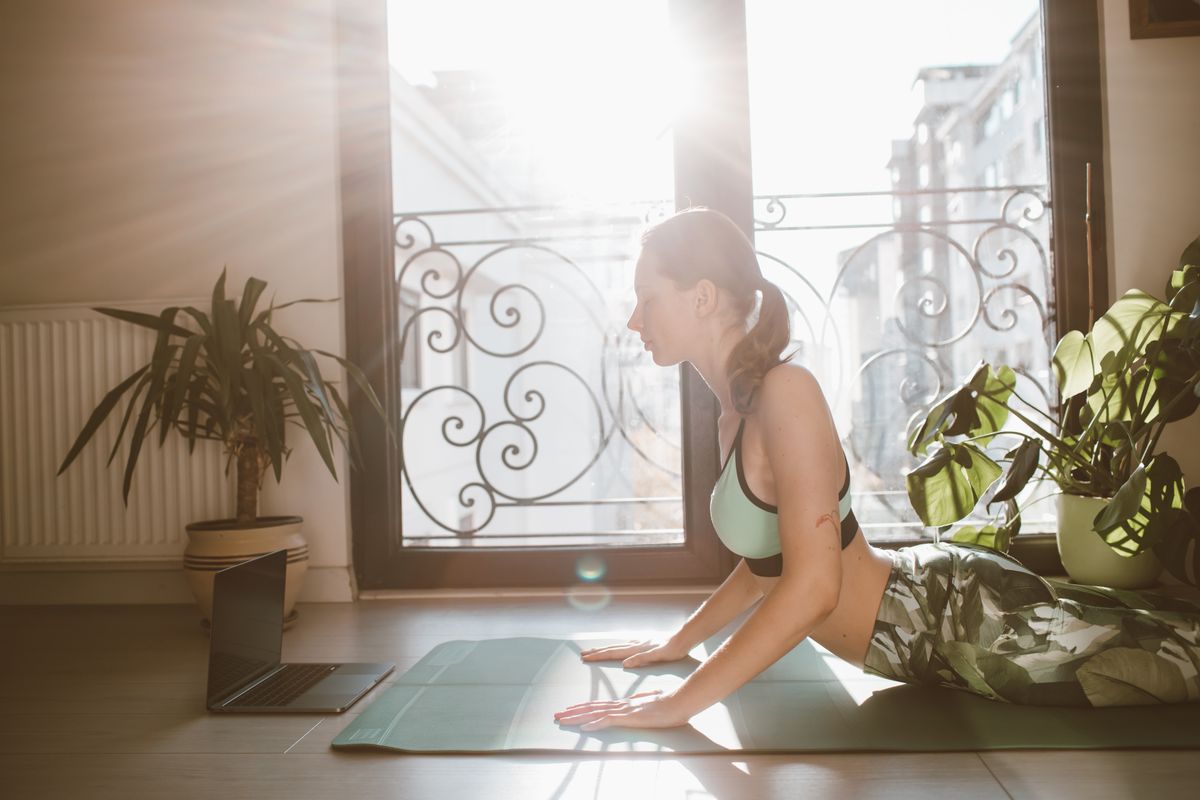
- Cat-cow (3–5 minutes) — Begin on all fours. Alternate between arching and rounding the spine on the breath. Warms the spine and connects breath to movement. Use a cushioned yoga mat for wrist and knee comfort.
- Thread-the-needle stretch (2 min each side) — From all fours, thread one arm under the body and rotate the spine. Opens the thoracic spine and shoulders — common sites of tension during desk work and stress.
- Supine figure-four hip stretch (2 min each side) — Lie on your back, cross one ankle over the opposite knee, gently draw the legs toward your chest. Releases the glutes and piriformis — helpful for joint-related perimenopause discomfort.
- Low lunge with side reach (2 min each side) — Opens the hip flexors, which tighten with prolonged sitting.
- Seated forward fold (2 minutes) — Legs straight or crossed. Gentle hamstring and lower back release.
- Legs-up-the-wall or supported bridge (3–5 minutes) — A deeply restorative pose that calms the nervous system and supports venous return. Particularly beneficial if hot flushes or evening restlessness are present.
- Savasana / breathwork (5 minutes) — Lie still, focus on slow exhales. Activating the parasympathetic nervous system through controlled breathing has direct benefits for sleep and stress — two of the most common perimenopause challenges.
Equipment spotlight: yoga mat
A thick, non-slip yoga mat makes all the difference for floor-based mobility work. Your knees, hips and wrists will thank you for the extra cushioning, especially if you are exercising on hard wooden or laminate flooring.

- 8mm thickness — noticeably more cushioned than standard 4mm mats
- Non-slip surface — secure grip for lunges, squats and standing poses
- Easy-wipe, low-maintenance surface
- £24.99
For more guidance on yoga practice at home, read our guide to yoga stretch bands and how to use them to deepen mobility work.
Recovery: The Overlooked Pillar
Sleep and recovery are not optional extras — they are where adaptation happens. During perimenopause, sleep disruption is one of the most frequently reported symptoms (affecting around 83% of women over 40, according to UK survey data). Poor sleep impairs muscle repair, increases cortisol, and makes high-intensity exercise significantly less productive.
Active recovery on rest days can include:
- Foam rolling — 10–15 minutes on the quads, hamstrings, glutes and thoracic spine. Helps reduce muscle soreness, improve tissue quality and reset the body between strength sessions.
- Walking — A 20–30 minute walk is one of the best weight-bearing activities available. Low cortisol impact, bone-beneficial, and a proven mood lifter.
- Gentle stretching — Five minutes of hip flexor stretches and shoulder openers first thing in the morning can meaningfully reduce the stiffness many women notice on waking.
Equipment spotlight: foam roller

- Grid surface for targeted myofascial release
- Firm but not aggressive — suitable for all experience levels
- Full-length for back and leg work
- £12.99
Want to know more about recovery tools? Our guide to resistance band home workouts includes a recovery section with foam rolling and mobility techniques you can use alongside this programme.
What NOT to do: common mistakes to avoid
- Daily HIIT or high-intensity classes — Beneficial in small doses; harmful if used as your primary daily exercise during perimenopause. Prioritise strength and mobility, use high-intensity work sparingly.
- Skipping rest days — Your body repairs and adapts during rest, not during exercise. Two or three rest or active recovery days per week is not laziness — it is good programming.
- Comparing your recovery to your 30s — Your body's response to training has changed. That is normal. Adjust expectations and celebrate consistent progress over sudden intensity spikes.
- Ignoring nutrition — Protein intake becomes particularly important for muscle maintenance during perimenopause. The BMS and NHS both highlight the importance of calcium-rich foods and adequate vitamin D for bone health.
- Exercising through pain — Joint discomfort is a common perimenopause symptom. There is a difference between the mild burn of working muscles and joint pain. If something hurts, stop and consult your GP or physiotherapist.
How to start: a practical first week
- Speak to your GP first — especially if you have any pre-existing conditions, have not exercised regularly in several years, or are experiencing significant perimenopause symptoms. This is covered in the disclaimer below.
- Get your mat and bands ready — You do not need a home gym. A mat, a light resistance band and a looped band cover the vast majority of this programme.
- Do just two sessions in week one — One strength session (Session A) and one mobility session. Do not try to do five days in your first week. Build the habit before building the intensity.
- Track how you feel, not just what you lifted — Energy levels, sleep quality, mood and joint comfort are as useful as reps and sets for guiding progress.
- Add sessions gradually — By week three or four, aim for the full four active sessions per week. By weeks six to eight, consider adding a third set to each exercise.
FAQs
Is it safe to exercise during perimenopause?
Yes — regular exercise is strongly recommended during perimenopause by the NHS, the British Menopause Society and most clinical bodies. Exercise supports bone density, muscle maintenance, cardiovascular health, mood and sleep. That said, always consult your GP before starting a new programme, particularly if you have existing health conditions or have been inactive for a long time.
How many days a week should I exercise during perimenopause?
Most guidance recommends at least two strength sessions and two to three sessions of other movement (mobility, walking, gentle cardio) per week. The NHS recommends 150 minutes of moderate activity per week for adults, which this programme meets comfortably. Quality and consistency matter far more than frequency — four sessions done regularly will outperform seven done sporadically.
Can a perimenopause exercise routine at home actually improve bone density?
Yes. Resistance training and weight-bearing exercise directly stimulate bone remodelling. A 2023 meta-analysis in Frontiers in Physiology found that moderate-intensity resistance training three days per week significantly improved bone mineral density at the lumbar spine and femoral neck in postmenopausal women. Starting during perimenopause — before the steepest phase of bone loss — offers the greatest protective benefit.
Should I avoid HIIT altogether during perimenopause?
Not necessarily, but daily HIIT is best avoided. Perimenopausal women tend to have a higher baseline cortisol and a slower recovery from cortisol spikes than younger women. One or two structured short HIIT sessions per week, with adequate rest between them, can be beneficial for cardiovascular fitness. But if you find you are exhausted after sessions that used to feel manageable, or you are sleeping worse after intense exercise, dial back the intensity and prioritise recovery.
What equipment do I need for a perimenopause home exercise routine?
Very little. A thick yoga mat, a set of resistance bands, and a resistance loop cover the majority of exercises in this guide. A foam roller for recovery is a worthwhile addition. You do not need a barbell, a rack or a home gym — the programme here is designed entirely around what you can do with minimal, compact equipment at home.
Will exercise help with hot flushes and sleep problems?
Evidence suggests yes, particularly for sleep. Regular moderate exercise is consistently associated with improved sleep quality in perimenopausal and menopausal women. For hot flushes, the evidence is more mixed — high-intensity exercise may temporarily worsen them by raising core body temperature, while cooling, restorative yoga and breathwork appear to help some women. Individual responses vary; tracking your symptoms alongside your exercise diary is the most useful approach.
How long will it take to see results?
Strength improvements typically become noticeable within four to six weeks of consistent training — the nervous system adapts quickly. Visible changes to body composition may take eight to twelve weeks and are strongly influenced by nutrition, sleep and hormone levels. Bone density changes occur over months to years. The most important result — feeling stronger, more energised and more in control of your body — is something most women notice within three to four weeks.
Conclusion
Perimenopause changes how your body responds to exercise — but it does not diminish what exercise can do for you. Done thoughtfully, a home-based routine built around strength, mobility and recovery can meaningfully protect your bone density, maintain muscle mass, improve sleep, stabilise mood, and help you feel genuinely at home in your body through one of its most significant transitions.
Start with two sessions this week. A yoga mat, a resistance band and thirty minutes are all you need. If you want to explore what these tools feel like in your hands, the Flexa.fit range is a good, accessible starting point — designed for exactly this kind of purposeful, everyday movement.
And if you are further along your menopause journey and looking for strength-focused movement, our resistance band home workout guide has a full-body programme that pairs well with the routine above.
Medical disclaimer: This article is for informational purposes only and does not constitute medical advice. Perimenopause is a medical condition with a wide range of presentations. Before starting any new exercise programme — particularly if you have been diagnosed with osteoporosis, osteopenia, cardiovascular disease, joint problems, or any other health condition — please consult your GP or a qualified healthcare professional. If you are experiencing significant perimenopause symptoms, speak to your GP about all available options, which may include lifestyle changes, HRT, and other medical treatments.
Share:
Low-Impact Strength Training for Women in Their 30s and 40s: 2026 Guide
Morning Mobility Routine for Women Over 40: 2026 10-Minute Guide