If you've been wondering what equipment do you need for Pilates at home, the honest answer is: a mat. That's it for day one. This 2026 UK buyer's guide is for beginners, returners, and anyone trying to build a Pilates kit at home without wasting money — covering the only must-have, the props worth adding next, and the kit you can confidently skip.
TL;DR
- Only must-have: a non-slip Pilates or yoga mat (4–8mm thickness).
- Add next, in order: Pilates ball (18cm), mini-band loop, magic circle (Pilates ring), foam roller, light dumbbells (1–3kg).
- Skip for now: reformers, towers, jump boards — start with mat Pilates and earn your way up.
- Realistic spend for a full home kit: roughly £45–£90 if you buy in stages.
- NHS guidance: Pilates can ease back pain, build core strength, and improve posture, but starting with the right kit and form matters most (NHS guide to Pilates).
Context: Why "less kit, better basics" wins for home Pilates
Joseph Pilates designed the original "Contrology" mat work to be done with nothing but bodyweight on the floor. Modern home Pilates has crept toward 15-piece "starter kits" with weighted balls, sliders, ankle weights, and resistance tubes you'll use twice — but the Pilates Foundation, the UK's main professional body, still teaches mat Pilates as the entry point for beginners.
Pilates has a real evidence base. A 2018 systematic review and meta-analysis of 23 randomised controlled trials in Complementary Therapies in Medicine concluded that Pilates significantly reduces pain and disability in people with chronic non-specific low back pain compared with minimal intervention (Yamato et al., 2018, PubMed). The NHS includes Pilates in its recommended physical-activity options for adults aged 19–64 (NHS physical activity guidelines). The Chartered Society of Physiotherapy also flags Pilates as a useful low-impact option for back pain, posture, and general mobility.
Translation: the routine and the form matter more than the kit. Buy the essentials, learn how to use them, then add as you grow.
What equipment do you need for Pilates at home? The 6 items ranked in order to buy
Here are the six props that genuinely earn their space, ranked by how soon you should buy them. Items 1–3 cover 90% of beginner Pilates videos. Items 4–6 are upgrades, not essentials.
1. Pilates / yoga mat — the only must-have

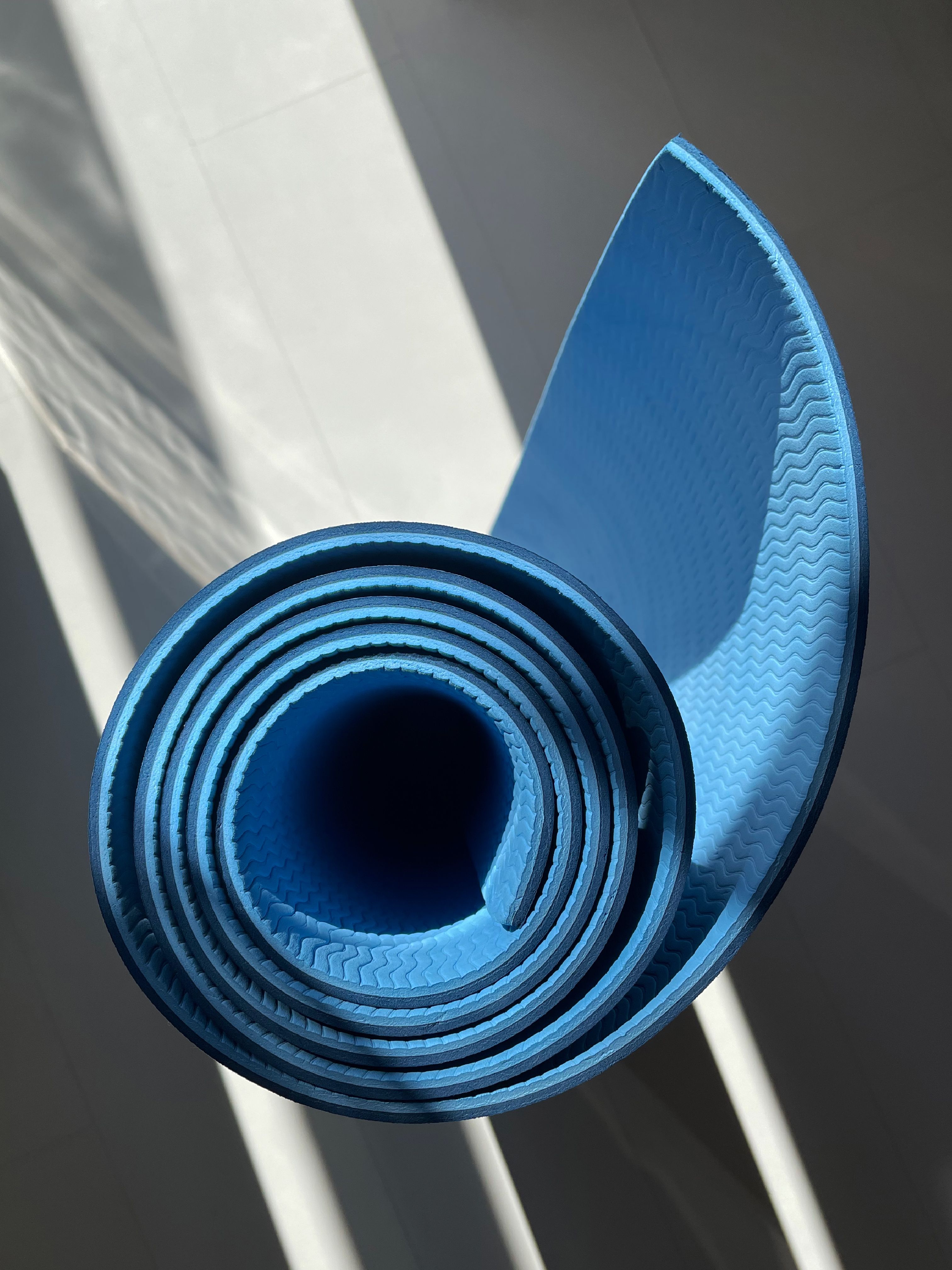
Why it's first: Pilates is mostly floor-based — bridges, hundreds, roll-ups, side-lying leg work. Without cushioning under the spine, sacrum, and tailbone, you'll bail out of moves before you've practised them long enough to feel any benefit. A 4–8mm mat is the sweet spot: thick enough to protect your spine, thin enough that you don't lose stability in standing or kneeling work.
The Flexa.fit Premium Yoga Mat 8mm is our pick for home Pilates because it's slightly thicker than a standard yoga mat (most are 4–6mm), which suits floor-heavy Pilates classes, and it has a textured grippy surface so your hands and feet don't slip during planks or roll-ups. UK delivery, £24.99.
Buy if: you don't already have a yoga or Pilates mat at home.
Skip if: you've got a 4mm+ yoga mat with grip — that's fine to start with. You don't need a Pilates-specific mat on day one.
- Best for: every home Pilates beginner, full stop.
- Price: £24.99 for the Flexa.fit 8mm; budget options £10–£18.
- Spec to look for: 4–8mm thickness, non-slip top surface, length at least 173cm.
2. Pilates ball (18cm) — the highest-leverage second buy

Why it's second: a soft 18cm Pilates ball (sometimes called a mini ball, soft ball, or overball) shows up in almost every modern beginner Pilates class — between the knees in bridges, behind the lower back in seated work, under the hips for pelvic-tilt drills. It's the single cheapest way to multiply what you can do with your mat.
The Flexa.fit Pilates Ball (18cm) ships deflated with a straw — inflate to about 80% firmness, not bursting, so it can deform under your body to add proprioceptive feedback. £5.99, which is roughly the price of a coffee and a pastry. It's the best £6 you'll spend on home fitness this year.
If you're new to it, our beginner Pilates ball exercises at home guide walks through 10 moves you can do in under 15 minutes.
- Best for: core engagement, pelvic alignment, anyone with weak glutes or tight hip flexors.
- Price: £5.99.
- Spec to look for: 18cm soft ball, anti-burst PVC, comes with a pump or inflation straw.
3. Mini-band loop (resistance loops) — for glutes, hips and standing work

Why it's third: mini-bands fix the one thing mat Pilates struggles to: external loading on the glutes. Looped around the thighs or ankles, they turn clamshells, side-lying leg lifts, glute bridges, and standing leg work into properly resisted exercises. They're also tiny and travel-friendly.
The Flexa.fit Resistance Loops (Latex-Free) come in five graduated strengths so you can progress as your glutes get stronger — and they're latex-free, which matters if you have a latex allergy or skin sensitivity. From £5.99 single, £19.17 for the set of five.
If you're not sure how stiff a band you need, our latex-free resistance bands UK guide breaks down the strengths.
- Best for: glute activation, hip stability, anyone who sits at a desk all day.
- Price: from £5.99.
- Spec to look for: graduated strengths (light → extra-heavy), latex-free if you have any rubber sensitivity.
4. Magic circle (Pilates ring) — optional, but lovely if you've got the basics
Why it's fourth, not first: the magic circle is iconic — Joseph Pilates literally invented it from a beer-keg hoop — and it adds a precise resistance feel to inner-thigh, chest, and arm work. But it's a one-trick prop. The Pilates ball already covers most of what beginners use a magic circle for, at a third of the price.
Buy a magic circle once you've used the ball regularly for 6–8 weeks and feel ready to progress. Look for a 14–15-inch ring with two firm rubber pads opposite each other and a flexible metal or composite frame. Expect to pay £15–£30 for a quality model. Flexa.fit doesn't currently stock one, so we'd point you to a Pilates-specialist retailer rather than the cheapest Amazon option.
- Best for: intermediate home Pilates, inner-thigh and chest work.
- Price: £15–£30.
- Skip if: you already own a Pilates ball and resistance loops — there's a lot of overlap.
5. Foam roller — for warm-up, mobility and the post-Pilates wind-down

Why it's fifth: a foam roller isn't a Pilates "tool" in the traditional sense — but it earns a place in your home kit because it solves the two things stiff beginners need most: thoracic-spine extension (mid-back stiffness from sitting) and post-session calf, glute, and IT-band release. Lying along the length of a roller for two minutes before a session opens up your upper back enough to actually do roll-ups properly.
The Flexa.fit High Density Foam Roller is a smooth EPP roller — firmer than entry-level rollers but not aggressive — at £18.99. If you're new to rolling, our foam roller exercises for lower back pain guide is the place to start.
- Best for: thoracic mobility, calves, glutes, post-session decompression.
- Price: £18.99.
- Spec to look for: 30–45cm long, smooth (not textured) for beginners, high-density EPP foam.
6. Light dumbbells (1–3kg) — only if you're moving toward "Pilates plus"
Why it's last: classical mat Pilates uses bodyweight. But "Pilates plus" classes — the kind you see on Apple Fitness+ or in modern UK studios — often add light handheld weights to arm circles, side-bends, and seated rows. A pair of 1kg or 2kg dumbbells covers most of what these sequences ask for.
Don't buy a full rack. One pair of 1kg or 2kg neoprene-coated dumbbells from any sports retailer (£10–£20) is plenty. Heavier than 3kg and you're doing strength training, not Pilates.
- Best for: upper-body Pilates, arm work, seated mat sequences.
- Price: £10–£20 a pair.
- Skip if: you mostly follow classical Pilates teachers — you don't need them.
What to skip: kit that looks essential but isn't
The 15-piece "complete Pilates kit" you'll see on Amazon usually bundles items you'll never use. Here's what to leave on the shelf as a beginner:
- Reformers, towers, jump boards: brilliant kit, £400–£3,000+, completely unnecessary at home until you've done 6+ months of consistent mat Pilates and know you'll use one.
- Ankle weights: very few classical Pilates instructors use them; they change the load profile of leg work in ways that can aggravate hips and knees if your form isn't bedded in.
- Core sliders: fun, but a tea towel on a hardwood floor or a paper plate on carpet does the same job for free.
- "Pilates socks": grippy socks are nice in a cold studio. At home, on a textured mat, you can do Pilates barefoot — that's how it's traditionally taught.
- Tubing with door anchors: tempting for "reformer-style" home work but most beginners don't have the form yet to use them safely without an instructor.
Build-your-kit budget: what to spend, in order
| Stage | Items | Total spend | What you can do |
|---|---|---|---|
| Day 1 | Mat | £15–£25 | Every classical mat Pilates video on YouTube, Apple Fitness+, or a beginner app. |
| Week 2–4 | Mat + Pilates ball | £21–£31 | Most beginner mat Pilates classes, including bridges, pelvic tilts, hundreds with ball. |
| Month 2–3 | Mat + ball + resistance loops | £27–£37 | Glute-focused Pilates, standing leg work, side-lying sequences. |
| Month 3+ | Add foam roller and (optionally) magic circle / light dumbbells | £60–£90 total | Full home Pilates kit — covers 95% of beginner-to-intermediate classes. |
If you'd rather buy a pre-built kit, our Resistance Starter Bundle bundles resistance loops with a Pilates ball and a mini exercise band for £13.99 — the cheapest way to get items 2 and 3 on this list at the same time.
Where to start training (free and paid options)
Owning the kit is half the battle. The other half is doing 20–30 minutes of Pilates, three to four times a week, for at least eight weeks — that's the dosage most peer-reviewed Pilates trials use to measure benefit.
- Free: the NHS publishes a 45-minute beginner Pilates video on its guide to Pilates page.
- Free: YouTube — search "beginner mat Pilates" for teachers like Lottie Murphy, Move With Nicole, and Bailey Brown.
- Paid (~£10–£20/month): apps like Glo, Pilatesology, and Apple Fitness+ have classical and contemporary Pilates programmes structured by level.
- Paid (one-off): a single in-person session with a Pilates Foundation-accredited instructor, even just to check your form, is the highest-ROI £40 you can spend before going home alone.
"Start with the essentials, add as you grow. Most people who quit home Pilates in the first month bought too much kit, not too little." — practical rule we use with every Flexa.fit beginner kit customer.
FAQs
What is the bare minimum equipment I need to start Pilates at home?
A non-slip mat, 4–8mm thick. That's it. Joseph Pilates designed mat work to be done with bodyweight only, and the NHS's introductory Pilates content uses no props beyond a mat. If you've already got a yoga mat with grip, you can start today and add a Pilates ball or resistance loops once you know you'll stick with it.
Do I need a Pilates-specific mat or will a yoga mat do?
A yoga mat works fine for the first few months. Pilates-specific mats tend to be slightly thicker (6–10mm vs the standard 4–6mm yoga mat) because Pilates is more floor-heavy and you spend longer on your spine. If your yoga mat is 4mm and your tailbone hurts during roll-ups, that's the signal to upgrade to something thicker like the Flexa.fit Premium Yoga Mat 8mm.
What's the difference between a Pilates ball and a gym ball?
A Pilates ball (sometimes called a soft ball, mini ball, or overball) is small and squashy — usually 18–25cm — and inflated to about 80% firmness so it deforms under your body. A gym ball (or Swiss ball) is the big 55–75cm sphere you sit on. Both are useful, but the small Pilates ball is far more versatile for home mat Pilates and costs a fraction of the price.
Are resistance loops the same as a Pilates magic circle?
No. Resistance loops are stretchy fabric or latex bands you loop around your thighs or ankles for glute and hip work. A magic circle is a rigid 14-inch ring with rubber pads that you squeeze between your knees, hands, or ankles. They overlap a bit, but loops are cheaper, more versatile, and more useful as your second prop. The magic circle is a nice-to-have once you're 2–3 months in.
Is Pilates safe for lower back pain?
For most people, yes — and there's evidence it actively helps. The 2018 meta-analysis in Complementary Therapies in Medicine (Yamato et al., PubMed) found Pilates reduced pain and disability in adults with chronic non-specific low back pain compared with minimal intervention. The NHS lists Pilates as a recommended option for back pain. That said, if you have an acute disc injury or post-surgical restrictions, see a physio before starting — the Chartered Society of Physiotherapy can help find one near you.
How much should a beginner home Pilates kit cost in the UK?
Realistically, £25–£40 to start (mat plus Pilates ball), or £45–£90 for a fuller kit including resistance loops and a foam roller. You don't need to spend more than that as a beginner. Anything you see priced at £150+ is a bundle that includes kit you won't use for the first six months — items like ankle weights, sliders, and grip socks that classical Pilates teachers don't lean on.
Can I do Pilates without any equipment at all?
You can do classical Pilates mat work on a carpeted floor with no kit — Joseph Pilates' original sequence (the "34 exercises") was designed exactly this way. It just isn't comfortable for long, and it's harder on the spine. A £15 mat removes that friction and is the single highest-impact purchase on this list.
Bottom line
If you only remember one thing: the right answer to "what equipment do you need for Pilates at home" is a mat, plus the discipline to actually use it three times a week. Once you've done that for a month, add a Pilates ball. After two months, add resistance loops. After three months, decide whether you want a foam roller and/or a magic circle. That's a £45–£90 home Pilates setup that will see you through your first year — and most of your second.
You don't earn results by owning kit; you earn them by showing up, on the mat, consistently. Start with the mat. Add as you grow.
Share:
Hot vs Cold Therapy for Muscle Pain: When to Use Each in 2026
Beginner Pilates Ball Exercises at Home: 10 Easy Moves for 2026