
If your lower back is stiff, sore, or grumbling at the end of a long day, the right yoga poses for lower back pain relief can calm symptoms, restore movement, and lower the chance of the next flare-up. This beginner guide is for UK readers — desk workers, runners, parents, and home yogis — who want a gentle, evidence-based routine they can do on a standard mat in around 15 minutes, with no prior experience needed.
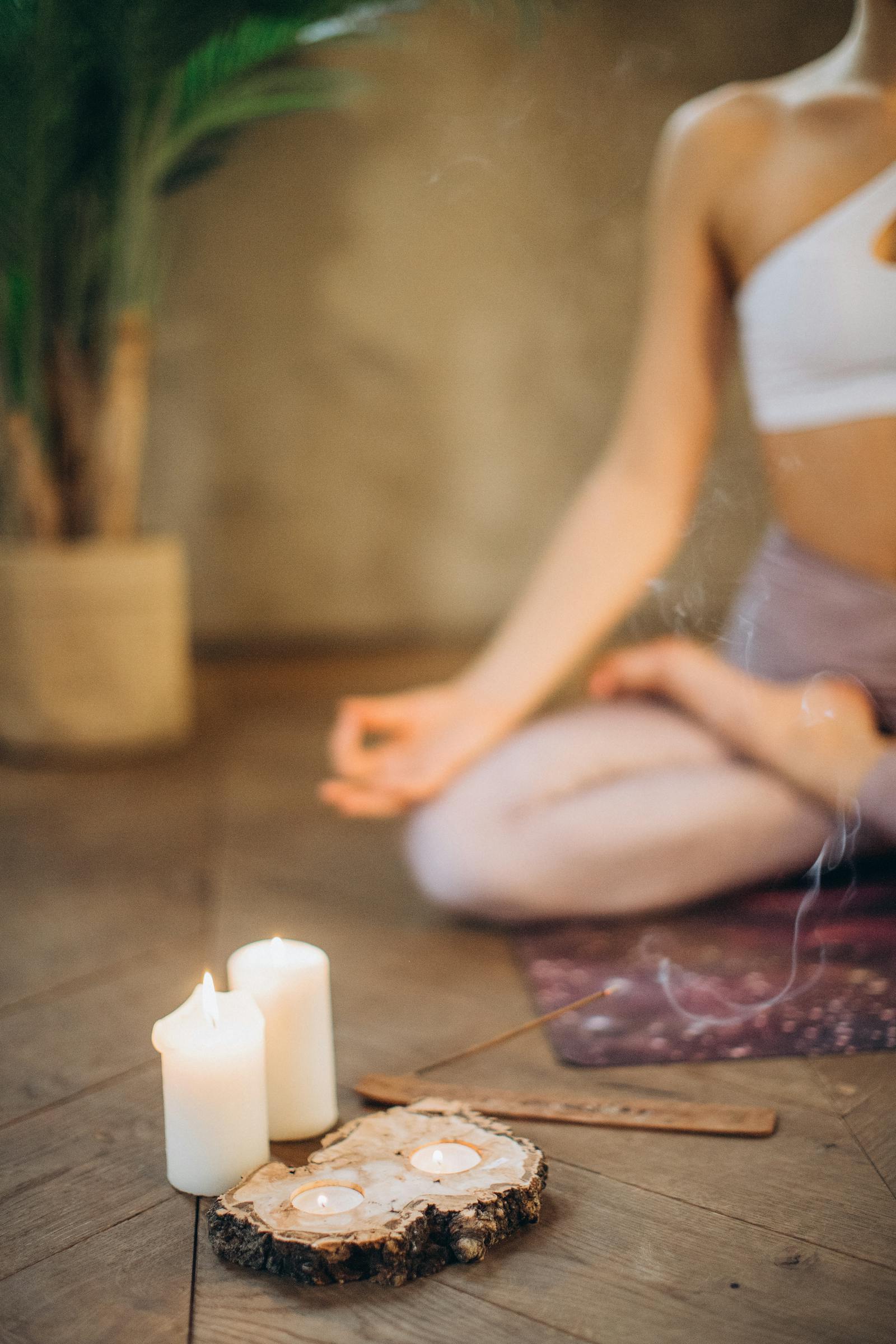
Photo via Pexels — free stock photography. Child's pose (Balasana) is one of the most accessible starting points for back-pain relief.
TL;DR
- Around 1 in 6 UK adults live with back pain at any one time, and roughly 4 in 5 people will experience it during their lifetime — it is the leading cause of disability in the UK.
- For non-specific lower back pain, NICE guideline NG59 recommends staying active and trying group exercise — including yoga — as a first-line option, alongside the NHS Live Well advice on back pain.
- A 2017 Cochrane review of 12 randomised trials found yoga produced small-to-moderate improvements in back-related function and pain at three and six months versus non-exercise controls.
- This guide gives you eight beginner-friendly poses sequenced as a single 15-minute flow: warm up, open, stretch, gently strengthen, cool down.
- Each pose includes Sanskrit and English names, step-by-step cues, what it targets, and clear contraindications — plus a final red-flag checklist for symptoms that need a GP, not a yoga mat.
Why yoga helps lower back pain — and who this is for
Lower back pain is the single biggest contributor to disability worldwide and the most common musculoskeletal reason UK adults take time off work, according to the Chartered Society of Physiotherapy. Most cases are non-specific — meaning no single structure is to blame, and recovery typically responds to gentle movement, reassurance, and gradual loading rather than rest or imaging.
That is exactly the niche yoga occupies. The NICE guideline NG59 on low back pain and sciatica recommends a group exercise programme — biomechanical, aerobic, mind-body, or a combination — as a first-line treatment, and explicitly lists yoga as an example of an acceptable mind-body approach. The 2017 Cochrane systematic review by Wieland and colleagues, which pooled 1,080 participants across 12 trials, concluded that yoga produced small-to-moderate improvements in back-related function and pain compared to non-exercise controls, with effects similar to other forms of structured exercise.
The practical reading: you do not need to be flexible, slim, or experienced to start. You need a non-slip mat, around 15 minutes, and a willingness to move within a comfortable range. If you are completely new to mat work, our guide to choosing a yoga mat is a useful five-minute primer before you begin.
Before you start: a safety primer
Yoga is not a substitute for diagnosis. Run through this short checklist before unrolling your mat:
- Recent acute injury (less than 72 hours): stop and follow the NHS first-aid advice for back pain first — gentle movement, paracetamol if appropriate, and a GP review if symptoms do not settle.
- Pregnancy: some twists and prone (face-down) poses need modification — speak to your midwife or a prenatal-trained instructor.
- Diagnosed disc, nerve, or spinal condition: get a green light from a physiotherapist before adding twists or deep flexion.
- Pain that is sharp, electric, or radiating into the leg below the knee is a flag to skip yoga today and book a clinical review.
The cardinal rule throughout this routine is simple: movement should ease symptoms, not provoke them. A 0–3/10 stretch sensation is fine. Anything above 4/10, or any sharp pain, means back off the range, modify, or skip the pose entirely.
What you need
You can practise this entire sequence on the floor with one piece of kit: a supportive yoga mat. A 6–8 mm mat gives the joint cushioning that beginners and anyone with back pain benefit from, without the squashy instability of a 12 mm+ mat. The Flexa.fit Premium Yoga Mat 8mm sits in this sweet spot and is the mat we recommend for this routine.

- 8 mm thick — enough cushion for kneeling, lying, and seated poses without sinking into the mat during balance work.
- Non-slip on both sides — important when you are easing into poses with a sore back.
- 183 cm × 61 cm — long enough for taller adults and for poses where head and tailbone need to stay on the mat.
If you would prefer to compare options first, our best yoga mats for 2026 ranking and best thick yoga mats for 2026 guides cover thickness, grip, and price trade-offs in more detail. A folded blanket and a firm cushion are useful optional props.
The 8 yoga poses for lower back pain relief
Move through these in order. Breathe through the nose. Hold each pose for 5–8 slow breaths unless stated otherwise. The whole flow takes about 15 minutes at an unhurried pace.
1. Cat–Cow (Marjaryasana–Bitilasana) — warm up
Targets: spinal mobility through the full thoracic and lumbar range; gently warms the paraspinal muscles, hip flexors, and abdominal wall.
- Start on hands and knees, wrists under shoulders, knees under hips, spine long.
- Inhale: drop the belly, lift the chest and tailbone, and look softly forward — Cow.
- Exhale: round the spine, tuck the tailbone, draw the belly to the spine, and let the head drop — Cat.
- Repeat slowly for 8–10 rounds, syncing the movement with the breath.
Skip or modify if: wrist pain (drop to forearms on a folded blanket), recent abdominal surgery, or late pregnancy.
2. Child's Pose (Balasana) — open
Targets: a gentle decompression of the lumbar spine; lengthens the lats, lower back, and hips.
- From hands and knees, bring your big toes together and widen the knees mat-width apart.
- Sit your hips back towards your heels and walk your hands forward.
- Rest your forehead on the mat (or on stacked fists/a cushion if it does not reach).
- Soften the shoulders away from the ears and breathe into the lower back. Hold for 6–8 breaths.
Skip or modify if: knee pain (place a rolled blanket behind the knees), pregnancy past the first trimester (widen knees further), or recent meniscus injury.
3. Sphinx Pose (Salamba Bhujangasana) — gentle extension
Targets: introduces gentle lumbar extension, which research from the McKenzie tradition suggests can centralise pain in some flexion-intolerant lower backs (always test cautiously).
- Lie face-down with legs extended, tops of the feet on the mat.
- Bring your forearms parallel on the mat with elbows directly under the shoulders.
- Press the forearms down and lengthen the chest forward and up — feel the front of the body open without crunching the lower back.
- Keep the glutes soft and the legs heavy. Hold for 5–8 breaths.
Skip or modify if: pregnancy, spinal stenosis, spondylolisthesis, or any pose-specific discomfort. If extension reproduces leg pain, come out and skip to pose 4.
4. Knees-to-Chest (Apanasana) — lumbar release
Targets: a passive flexion-based release for the lower back, glutes, and hip flexors. Often the single most reliable pose for next-day stiffness.
- Lie on your back with the mat supporting the full length of your spine.
- Draw both knees in towards the chest and clasp the shins or backs of the thighs.
- Keep the head and shoulders relaxed on the mat; tailbone stays heavy.
- Breathe slowly. Optional: rock gently side-to-side for a self-massage. Hold for 8–10 breaths.
Skip or modify if: third-trimester pregnancy, recent abdominal or hip surgery, or hip pain (try one knee at a time).
5. Supine Figure-4 (Eka Pada Supta Kapotasana) — glute and hip release
Targets: the glutes (especially gluteus medius and piriformis) and the outer hip — tight hips are a common driver of lumbar pain.
- Lie on your back with knees bent, feet flat on the mat.
- Cross your right ankle over your left thigh, just above the knee, forming a "4" shape.
- Thread your right hand through the gap and clasp the back of the left thigh (or the front of the shin if comfortable).
- Gently draw the left leg towards your chest until you feel a stretch in the right glute. Keep both shoulders heavy on the mat.
- Hold for 6–8 breaths, then switch sides.
Skip or modify if: hip replacement (avoid deep hip flexion with rotation without your surgeon's clearance), or sharp pain at the front of the hip.
6. Supine Spinal Twist (Supta Matsyendrasana) — rotational release
Targets: spinal rotation, the QL (quadratus lumborum), the obliques, and the lumbar fascia.
- Lying on your back, draw your right knee in towards your chest.
- Guide it across your body to the left with your left hand, keeping your right shoulder grounded.
- Extend your right arm out to the side at shoulder height; turn your head softly to the right if comfortable for the neck.
- Hold for 6–8 breaths, breathing into the side ribs. Repeat on the other side.
Skip or modify if: recent spinal surgery, disc herniation in the acute phase, or pregnancy past the first trimester (use an open twist with both knees stacked on a cushion instead).
7. Bridge Pose (Setu Bandha Sarvangasana) — gentle strengthening
Targets: glutes, hamstrings, and the deep posterior chain — a small but essential dose of strengthening for an irritable lower back.
- Lie on your back, knees bent, feet hip-width apart and roughly a hand's-length from the buttocks.
- Press the feet down evenly and lift the hips towards the ceiling, drawing the inner thighs together.
- Keep the chin slightly tucked so the back of the neck stays long. Arms rest by your sides; you can interlace the hands beneath the pelvis if it feels good.
- Hold for 5 breaths, lower slowly vertebra by vertebra, and repeat 3 times.
Skip or modify if: neck injury, pregnancy past the first trimester (use a low bridge held briefly), or any pinching sensation in the lower back — drop the height and re-engage the glutes before lifting again.
8. Legs-Up-the-Wall (Viparita Karani) — cooldown
Targets: a passive, restorative finish that drains tension from the legs and decompresses the lumbar spine; activates the parasympathetic nervous system, which research from the Cochrane yoga and back-pain review identified as part of yoga's mechanism for chronic pain.
- Sit sideways with one hip touching a wall.
- Lie back as you swing your legs up the wall, scooting the buttocks as close to the skirting board as is comfortable.
- Let the arms rest by your sides, palms facing up.
- Stay for 3–5 minutes, breathing slowly in and out through the nose.
Skip or modify if: uncontrolled high blood pressure, glaucoma, or late pregnancy — substitute with knees-bent over a chair seat.
Putting it together: a 15-minute routine
Done in order, the eight poses form a complete mini-class:
- Warm up — Cat–Cow (2 minutes)
- Open — Child's Pose (1 minute)
- Stretch — Sphinx, Knees-to-Chest, Supine Figure-4, Supine Twist (≈8 minutes total)
- Gently strengthen — Bridge x3 (1 minute)
- Cool down — Legs-Up-the-Wall (3 minutes)
Aim for 3–5 sessions per week. The 2017 Cochrane review found benefits emerged at around six weeks of consistent practice. If a particular pose stays uncomfortable after a fortnight, leave it out and revisit it after a chat with a physiotherapist.
Beyond yoga: complementary recovery tools
If your back pain is muscle-driven — tightness across the lumbar paraspinals, glutes, or hamstrings — gentle self-myofascial release alongside yoga can extend the benefits. A soft-density foam roller used on the upper back (never directly on the lumbar spine) is the safest entry point. The Flexa.fit Grid Foam Roller works well for thoracic spine mobility, and the Spiky Massage Ball targets glutes and piriformis without aggravating the spine. For a fuller toolkit, browse the Flexa.fit foam roller collection.

Red-flag symptoms — see a doctor, not a yoga mat
Stop the routine and contact NHS 111 or A&E if your back pain is accompanied by any of these red-flag symptoms listed by the NHS:
- Numbness or tingling around the genitals or buttocks (saddle anaesthesia)
- New difficulty controlling your bladder or bowels
- Severe, escalating pain that is worse at night or wakes you from sleep
- Pain following a significant fall, road accident, or other trauma
- Unexplained weight loss, fever, or a history of cancer alongside new back pain
- Numbness, tingling, or weakness in one or both legs that is new or worsening
These signs point to conditions such as cauda equina syndrome, fracture, infection, or referred visceral pain, all of which need urgent assessment. Yoga is not the right first step.
FAQs
How often should I practise these yoga poses for lower back pain relief?
Start with three sessions a week and build up to four or five as your body adapts. The 2017 Cochrane review found measurable improvements in function and pain emerged after about six weeks of consistent practice, with bigger gains at three and six months — so think of it as a slow, steady habit rather than a one-off fix.
Is yoga safe if I have a herniated disc?
Often yes, but with caveats. NICE NG59 still recommends staying active, and many disc-related lower back pains improve with gentle movement. Avoid deep forward folds, loaded twists, and forced stretching during the acute phase, and ideally have your routine reviewed by a physiotherapist. Sphinx, Knees-to-Chest, and Bridge are usually well tolerated; deep seated forward folds are not.
How long until I feel a difference?
Most beginners notice better mobility and looser muscles within the first 2–3 sessions. Pain reduction typically follows over 4–8 weeks of regular practice. If you have not felt any change after a month of consistent, pain-free practice, that is a useful signal to see a physiotherapist or your GP rather than push harder.
Should I do yoga during a back-pain flare?
For non-specific lower back pain, gentle movement is generally better than rest, according to the NHS. During a flare, scale the routine right back: Cat–Cow, Child's Pose, Knees-to-Chest, and Legs-Up-the-Wall only, held for shorter durations. Skip Sphinx, twists, and Bridge until symptoms settle. If pain is severe or persistent for more than 6 weeks, see your GP.
Do I need a thick yoga mat for back pain?
A 6–8 mm mat is the sweet spot for most beginners with back pain — enough cushion for kneeling and lying poses, but firm enough for balance work. Mats above 10–12 mm can feel unstable in standing poses, and very thin mats (3 mm) can aggravate sore knees, hips, or coccyx. The Flexa.fit Premium Yoga Mat 8mm is a sensible default, and our how to choose a yoga mat guide covers the trade-offs in detail.
Can I combine yoga with foam rolling?
Yes — used together they cover different mechanisms. Yoga improves mobility, motor control, and the nervous-system response; foam rolling reduces local muscle tone and tenderness. Roll the upper back, glutes, and hamstrings before your yoga routine for 3–5 minutes per area, never directly over the lumbar spine. The Flexa.fit Grid Foam Roller is suitable for most beginners; see our foam roller collection for alternatives.
Is yoga better than physiotherapy for back pain?
It is not an either/or. Physiotherapy provides a tailored diagnosis and individualised loading plan; yoga is one form of group exercise that NICE recommends as first-line care. For mild, non-specific lower back pain, structured yoga alone is often enough. For recurrent, severe, or radiating pain, see a physiotherapist first and add yoga once you have a clear plan.
Conclusion
Lower back pain rarely needs a complicated solution. For the millions of UK adults living with non-specific symptoms, the evidence from NICE, the NHS, and the 2017 Cochrane review all point in the same direction: gentle, regular movement beats rest. The eight yoga poses for lower back pain relief in this guide give you a complete 15-minute routine — warm up, open, stretch, gently strengthen, cool down — that you can practise on a single mat at home, three to five times a week.
Start where your body is today, not where you would like it to be. Track how you feel after a fortnight. If symptoms ease, keep going. If they do not, or you have any of the red-flag signs above, book a review with your GP or a physiotherapist — yoga complements clinical care, it does not replace it.
Disclaimer: This article is for informational purposes only and is not medical advice. Consult a qualified healthcare professional before starting any new exercise programme, especially if you have an existing condition or injury, are pregnant, or are recovering from surgery.
Share:
Why Latex-Free Resistance Bands Matter for Physio Rehab in 2026
Pilates Equipment for Beginners UK: 2026 Cost Guide and Best Starter Picks