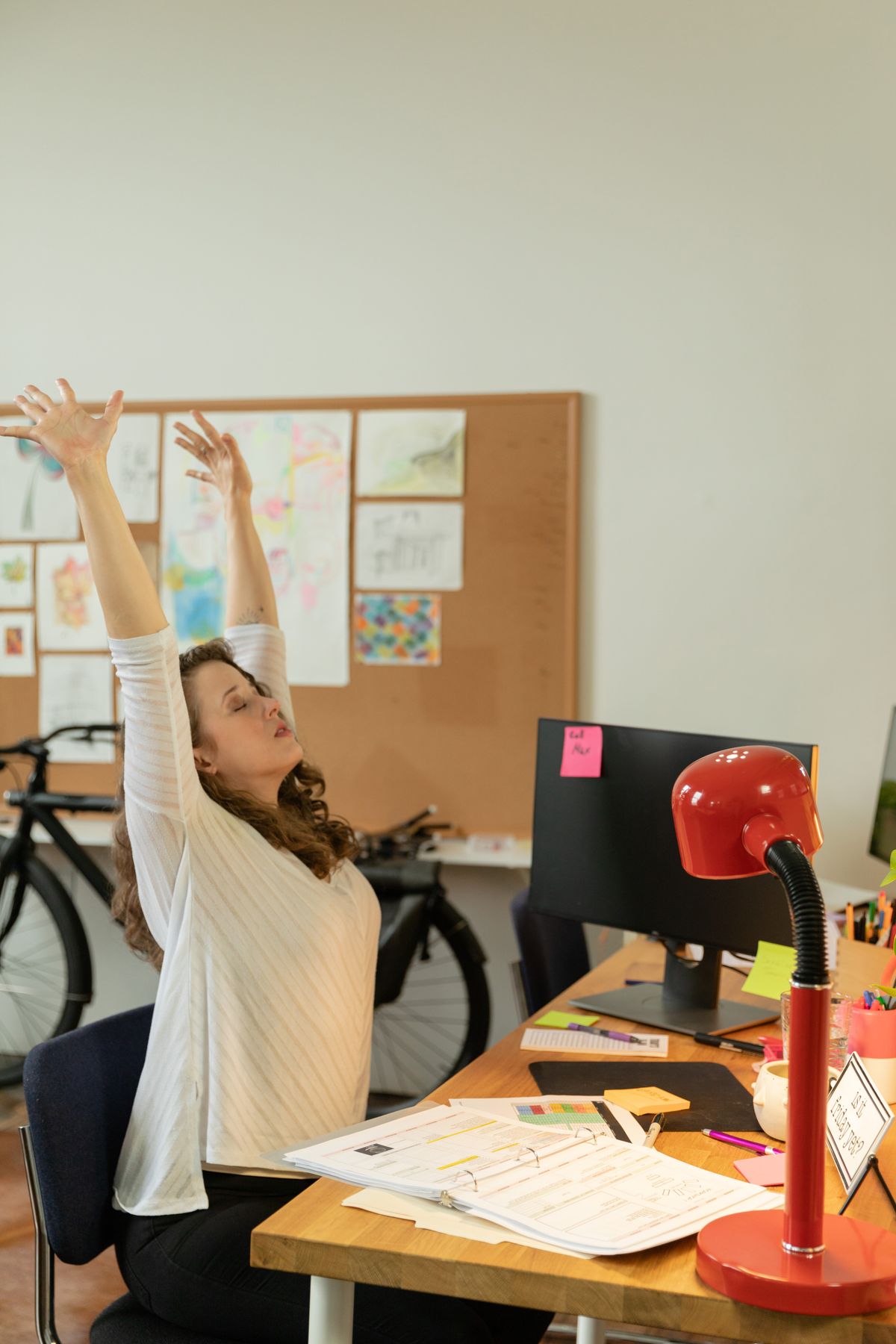
An office mobility kit for hybrid workers is the practical answer to one of the most common complaints among the UK's growing desk-based workforce: the stiffness, aches and postural strain that build up across split weeks of home and office work. This round-up covers five compact tools — a lacrosse ball, resistance loops, a mat, a foam roller, and a pilates ball — ranked by their impact on desk-related musculoskeletal discomfort and ordered by affordability, so you can build an effective kit without overspending. Whether you keep the whole set under your home desk or pack a couple of items in your bag for office days, every product here fits the hybrid lifestyle.
TL;DR
- An office mobility kit for hybrid workers doesn't need to be large or expensive — five compact items cover all the bases.
- Lacrosse ball — highest impact per pound; works under the desk for trigger-point release on feet, glutes and thoracic spine.
- Resistance loops — quick microbreak activations for glutes, hips and shoulders that counter hours of sitting posture.
- Exercise mat — floor stretches and end-of-day decompression; doubles as a yoga or pilates base at home.
- Foam roller — thoracic and lumbar reset after long desk sessions; key for anyone commuting on top of desk work.
- Pilates ball (18cm) — active sitting, lumbar support and seated micro-exercises that work quietly during calls.
- 28% of UK workers are now hybrid (ONS 2025) — and 50% of those with suboptimal home setups have developed musculoskeletal problems.
- HSE's 2024/25 statistics record 511,000 UK workers with work-related MSDs and 7.1 million working days lost.
- All five Flexa.fit products are available at flexa.fit with free UK delivery over a threshold — links throughout.
Why hybrid workers need an office mobility kit
Hybrid working has reshaped the UK labour market faster than ergonomic habits have kept pace. According to the Office for National Statistics, 28% of UK workers followed a hybrid pattern between January and March 2025, with 74% of organisations having a formal hybrid policy in place (CIPD, 2025). That is millions of people splitting their working week between carefully assessed office workstations and kitchen tables, spare rooms, or sofas that were never assessed at all.
The consequence shows up clearly in the data. The Health and Safety Executive's 2024/25 key figures record 511,000 workers suffering from a work-related musculoskeletal disorder — accounting for 27% of all work-related ill health — with 7.1 million working days lost as a result. Upper limbs and neck accounted for 41% of all MSD cases; back disorders accounted for another 43%. These are not injuries from heavy lifting. A significant portion are desk-related: poor posture, static loading, no movement variety, and no recovery tools.
The HSE's Display Screen Equipment (DSE) Regulations require employers to assess workstations for DSE users who work at a screen "daily, for continuous periods of an hour or more" — and that obligation extends to home working. The practical gap, however, is that an assessment identifies risk but doesn't provide recovery. That's what a compact mobility kit fills: tools you can use during microbreaks, at the end of a call, or in the ten minutes before dinner.
A 2024 systematic review in HELIYON (PubMed/PMC) found that work-related MSDs among computer users ranged from 33.8% to 95.3% across studies, with the lower back, neck, upper back and shoulder consistently identified as the most affected body areas. The same evidence base identifies "lack of physical exercise and insufficient break time" as key modifiable risk factors — exactly what the tools below address.
How we ranked these products
Five categories were set in the brief — lacrosse ball, resistance loops, mat, foam roller, and pilates ball — and ranked in order of impact per cost. Each product was assessed on: (1) how directly it addresses the most prevalent hybrid-worker complaints (lower back, neck/shoulder, hip flexors); (2) how easily it fits under or beside a desk; (3) price in GBP. All five items are available from Flexa.fit (flexa.fit) and are stocked in the UK for fast delivery. Competitor alternatives are noted where they genuinely differ in material, dimension, or price point, to keep the guide useful as an honest comparison.
The best office mobility kit for hybrid workers: 5 picks ranked
1. Flexa.fit lacrosse ball — best for under-desk trigger-point release

The lacrosse ball is the single highest-impact item in any desk-worker mobility kit, and it costs less than a coffee. A solid rubber ball of approximately 6.3cm diameter, it sits unobtrusively under the desk so you can roll the arch of the foot, the calf, or the outer hip across it while staying on a call. Used against a wall or on the floor for five minutes at the end of a session, it targets the thoracic spine, the glutes (the driver of most sedentary lower back pain), and the shoulder blade perimeter — areas no chair or lumbar roll can reach.
The Flexa.fit Lacrosse Ball is solid natural rubber with a consistent density — firmer than a tennis ball, which means it holds a trigger point under sustained pressure rather than compressing away. It's the same spec used by physiotherapists for myofascial release. For a more detailed guide on technique, see How to Use a Lacrosse Ball for Massage on the Flexa.fit blog.
- Pros: Extremely portable; works for feet, glutes, back, shoulders; inexpensive; high-density rubber holds pressure.
- Cons: Rolls away if not contained; no surface texture (see spiky massage ball if you prefer a gentler warm-up).
- Best for: Anyone with plantar fasciitis, tight glutes from sitting, or thoracic tension from screen work.
- Price range: £5–£8
2. Flexa.fit resistance loops — best for microbreak activations

Resistance loops (also called mini bands or loop bands) are the second item any hybrid worker should own. Unlike full-length resistance bands, loops are short, closed circles — roughly 30cm x 8cm — that stay put around the ankles or above the knees without requiring a looped knot or anchor point. That makes them ideal for desk-adjacent use: a set of clamshells or banded hip hinges takes two minutes and can be done beside the desk in bare feet.
The Flexa.fit Resistance Loops come in a set of five progressive resistances, are made from 100% natural-latex-free TPE (important for allergy safety in clinical and shared office settings), and are compact enough to slip into a laptop bag for office days. Beyond glute activation, loops are effective for shoulder activation — looping around the wrists for external rotation against the band counters the internal rotation pattern that builds up from typing. For a full routine, see Resistance Band Home Workout on the Flexa.fit blog.
- Pros: Latex-free; five resistance levels; fits in any bag; works for lower and upper body; inexpensive per band.
- Cons: Loops are less versatile than long bands for pulling exercises; fabric loops last longer if you use them daily.
- Best for: Glute activation, hip mobility, shoulder activation, postural resets during microbreaks.
- Price range: £8–£15 for a set of five
3. Flexa.fit exercise mat — best for floor stretches and end-of-day decompression

A mat is the least glamorous item in a hybrid worker's mobility kit, but it is the one that enables everything else to be done properly. Without a mat, floor stretches — the supine hip flexor stretch, the 90-90 hip rotation, the child's pose thoracic opener — either get skipped entirely or are done on a hard floor with compromised technique. The mat also provides a dedicated signal: when you roll it out at the end of a work session, your nervous system registers a boundary between work and recovery.
For desk workers, an 8mm thick mat provides enough cushioning for bony contact points (knees, sacrum, thoracic spine) without the sponginess that makes balance work imprecise. The Flexa.fit Premium Yoga Mat 8mm has a non-slip surface on both sides and is long enough for someone up to approximately 185cm. It doubles as a yoga and pilates base for home sessions, so it earns its space. Review of beginner mat-based movements in our Beginner Pilates Ball Exercises at Home guide covers complementary floor work.
- Pros: Enables full range of floor-based mobility work; non-slip; multipurpose (yoga, pilates, stretching); easy to store rolled.
- Cons: Not easily portable for office commuters (consider a foldable travel mat if you need something for office days).
- Best for: Home-desk workers who want a dedicated recovery space; anyone doing yoga or pilates alongside desk work.
- Price range: £15–£30
- Where to buy: flexa.fit/collections/foam-rollers and the yoga mat range
4. Flexa.fit high density foam roller — best for end-of-day thoracic and lumbar reset
A foam roller placed lengthways along the spine — thoracic extension over the roller — provides a passive thoracic opening that no stretch or exercise fully replicates. After five or more hours at a screen in slight spinal flexion, this two-minute supine extension is the fastest way to reset the upper back, release the anterior chest, and decompress the vertebral segments that spend the day compressed by sitting posture.
The Flexa.fit High Density Foam Roller is a smooth, high-density EVA roller (full-length 90cm x 15cm diameter) that holds its shape under body weight without collapsing. High density is the correct choice for desk recovery: medium or low density rollers compress too quickly under a typical adult's thoracic spine, reducing the passive extension effect. For a complete guide to technique, see Foam Roller Exercises for Lower Back Pain on the Flexa.fit blog — many of the movements apply equally to thoracic and hip work relevant to hybrid workers.
If you prefer more targeted treatment, the Grid Foam Roller Blue provides a textured surface for more specific trigger-point work, at the same price point.
- Pros: Full-length; high-density EVA holds shape; works for thoracic extension, ITB, calves, quads; easy to store upright.
- Cons: Not portable for commuting days; high density may feel intense for users new to foam rolling (spend 30 seconds per segment to start).
- Best for: End-of-day thoracic reset, lower back decompression, post-commute leg recovery.
- Price range: £12–£20
5. Flexa.fit Pilates ball (18cm) — best for active sitting and seated micro-exercises

The 18cm pilates ball is the item in this kit that works while you work, rather than requiring you to stop. Placed between the lower back and the chair, it provides gentle lumbar support and encourages a slightly more upright pelvic position — the same principle as a lumbar roll, but softer and more dynamic. Alternatively, squeezed between the inner thighs while seated, it provides constant low-level adductor and core activation that research suggests may reduce the metabolic cost of sedentary sitting posture.
For hybrid workers who move between desks, the 18cm pilates ball weighs under 100g deflated and folds flat — it travels in a laptop bag without trouble. A small hand pump (included with the Flexa.fit version) reinflates it in under two minutes. For a broader look at pilates-ball active sitting, see the Flexa.fit guide Is Sitting on a Pilates Ball Better Than Sitting in a Desk Chair? — the evidence summary there applies equally to the mini ball used as lumbar support.
- Pros: Works during calls or focused work; portable deflated; lumbar support or inner-thigh activation; very low cost.
- Cons: Requires a pump to inflate on office days unless you carry it pre-inflated; less effective as a standalone chair substitute (a full-size balance ball is needed for that).
- Best for: Active sitting, lumbar support, seated hip and core micro-exercises during work hours.
- Price range: £6–£10
Building your office mobility kit for hybrid workers: what to buy first
If budget is a constraint, the lacrosse ball first, resistance loops second order works well. Together they cost under £20, weigh almost nothing, and address the two most common hybrid-worker complaints: trigger-point tightness from static sitting, and glute/hip inhibition from prolonged chair posture. Add the pilates ball for under-desk active sitting; add the foam roller when you want a full end-of-day reset; add the mat when floor work becomes a regular habit.
| Item | Primary Use | When to Use | Approx. Price |
|---|---|---|---|
| Lacrosse Ball | Trigger-point release — feet, glutes, thoracic | Under desk during calls; against wall post-session | £5–£8 |
| Resistance Loops | Glute / hip / shoulder activation | 2-minute microbreaks every 30–45 minutes | £8–£15 |
| Exercise Mat | Floor stretches, yoga, pilates | End of work session; morning mobility | £15–£30 |
| Foam Roller | Thoracic extension, lumbar decompression | End of day; post-commute | £12–£20 |
| Pilates Ball (18cm) | Active sitting, lumbar support, core activation | Throughout work hours; seated micro-exercises | £6–£10 |
What the research says about desk mobility and mSDs
The evidence for mobility tools and microbreaks in desk-work contexts is well-established. A 2024 systematic review of work-related MSDs among computer users (Afshari et al., HELIYON, PMC) confirmed that "lack of physical exercise and insufficient break time" are among the key modifiable risk factors, and that interventions addressing posture, break frequency, and exercise "could substantially reduce disorder prevalence." The review found WMSD prevalence among desk workers ranging from 33.8% to 95.3% across study populations — with the lower back, neck, and upper back consistently identified as the most affected regions.
Active microbreaks specifically — two to three minutes of light activity for every 30 minutes of sedentary work — have been shown to decrease musculoskeletal discomfort and improve cardiometabolic markers. The tools in this kit make those microbreaks low-friction: a lacrosse ball already on the floor, a set of resistance loops in a drawer, a pilates ball behind your back. The barrier to actually doing the break drops to near zero.
From an employer perspective, the HSE's DSE regulations extend to home workers, and the financial case is straightforward: 7.1 million working days were lost to MSDs in 2024/25, at an average of 14 days per affected worker. The five items in this kit cost less than £80 in total — a fraction of the absence cost even for a single episode.
FAQs
What is an office mobility kit for hybrid workers?
An office mobility kit for hybrid workers is a small collection of tools — typically a massage ball, resistance loops, a mat, a foam roller, and a pilates or balance ball — designed to address the musculoskeletal strain of desk work. Unlike gym equipment, these items are compact enough to store under a desk or in a work bag and can be used during short breaks or at the end of a work session. The goal is to counter the static posture, hip flexor shortening, and thoracic stiffness that accumulate across hybrid working days at inconsistent workstations.
How often should I use mobility tools if I work from home?
HSE guidance recommends regular breaks from DSE work; most physiotherapists and occupational health practitioners suggest a movement break every 30–45 minutes of continuous desk work. In practice, two to three minutes of resistance loop or lacrosse ball work every 45 minutes, plus a five-to-ten minute foam rolling or mat session at the end of the working day, represents a realistic and effective routine for most hybrid workers. See our Morning Mobility Routine guide for a structured framework.
Can a pilates ball replace a lumbar support cushion?
The 18cm pilates ball works differently from a lumbar roll: placed between the lower back and a chair, it provides soft, dynamic support that encourages subtle postural adjustment rather than rigidly holding a position. It is not a substitute for a properly assessed ergonomic chair, but for workers who move between multiple desks, it is a compact and effective way to carry some lumbar support with them. For a full comparison, see the Flexa.fit guide on sitting on a pilates ball vs a desk chair.
Is a foam roller useful for neck and shoulder pain from desk work?
Yes. Placed lengthways along the spine in a supine position, a foam roller provides passive thoracic extension — the opposite of the rounded-forward posture that builds up during screen work. This decompresses the upper thoracic and lower cervical spine, which can reduce the referred tension felt in the neck and between the shoulder blades. Ten minutes of thoracic work on a foam roller in the evening is among the highest-yield recovery interventions for desk workers, according to physiotherapy practitioners. Direct neck rolling on a foam roller is not recommended; use a lacrosse ball against the wall for deeper suboccipital work.
Are resistance loops safe to use at a desk without prior fitness experience?
Resistance loops are among the safest resistance tools available — they produce progressive, controllable resistance with no risk of dropping weight or losing grip. Exercises such as clamshells, seated banded hip abduction, and standing banded shoulder external rotation are appropriate for beginners with no prior training background. Start with the lightest resistance in the set and build over two to three weeks. If you have an existing lower back, hip, or shoulder injury, consult a physiotherapist before adding resistance work to your routine.
What does the HSE say about home worker workstation assessments?
The HSE's Display Screen Equipment Regulations apply to home workers who use a screen daily for continuous periods of an hour or more — the same threshold as office workers. Employers are legally required to conduct or facilitate a workstation assessment, provide information and training, and ensure workers take adequate breaks. The HSE DSE guidance page provides a self-assessment checklist that home workers can complete with or without an employer's involvement. A mobility kit addresses the recovery side of that equation, but it does not replace a proper ergonomic assessment of chair height, screen position, and lighting.
Do I need the full kit, or can I start with just one or two items?
You can build the kit incrementally. Most hybrid workers see the biggest return from the lacrosse ball and resistance loops first — these two items together cost under £20, cover the most common pain points (glutes, thoracic, hip flexors, shoulders), and require no floor space. Add the pilates ball if you want a passive tool you can use while working. Add the foam roller when evening recovery becomes a consistent habit. The mat comes last, when floor-based mobility or yoga is part of a regular routine.
Conclusion
The office mobility kit for hybrid workers doesn't need to be elaborate. Five items — a lacrosse ball, a set of resistance loops, an exercise mat, a foam roller, and an 18cm pilates ball — cover the full spectrum of desk-related musculoskeletal risk: trigger-point tension, glute and hip inhibition, thoracic stiffness, lumbar loading, and the sedentary posture patterns that accrue across hybrid working weeks. Together, they cost under £80, fit under most desks, and most can travel in a work bag for office days.
With 511,000 UK workers affected by work-related MSDs each year and hybrid working now the norm for more than a quarter of the UK workforce, building a recovery habit into the working day is no longer optional for long-term physical health. The HSE's DSE regulations provide the framework; a compact mobility kit provides the practice.
All five Flexa.fit products are available at flexa.fit with fast UK delivery. Start with the lacrosse ball and resistance loops if you're building the kit incrementally — your lower back will notice the difference within a week.
Share:
10-Minute Stretching Routine for Office Workers: 2026 Daily Plan
How to Return to Exercise After Pregnancy Safely: 2026 Guide