
If you have ever eyed a hand gripper on the shelf and wondered whether squeezing a spring really does anything, this is the honest, fun answer, plus the grip strength exercises that get you from "my jar lids win every time" to "hand me that, I've got it." Short version: yes, hand grippers work, as long as you treat them like proper training and not a stress toy you crush twice and forget. Let's get into it.
TL;DR
- Do hand grippers work? Yes, when you progress them. Squeeze the same easy gripper forever and nothing happens. Add resistance, reps, holds and slow negatives, and your grip absolutely gets stronger.
- Grip strength is a genuine health signal, not just gym bragging. A huge international study linked stronger grip to lower risk of dying early and fewer heart problems.
- Best results come from variety. Grippers for crushing power, hangs and carries for holding power, pinch work and putty for the bits grippers miss.
- You need very little. Two or three short sessions a week, a gripper, and something to hang from or carry. That is basically it.
- Rough dosage: 3 sets of 8 to 12 hard-but-clean squeezes, or timed holds of 20 to 45 seconds, resting a couple of days between grip-heavy sessions.
- Our starter kit: a hand gripper set for progression, a foam finger gripper to start gentle, and hand therapy putty for everyday reps on the sofa.
Do hand grippers actually work?
Yes, and here is the catch that decides everything: they work exactly as well as you make them work. A hand gripper trains your "crush grip," the same action you use to close your hand hard around a bar, a bag handle or a stubborn lid. Squeeze against real resistance often enough and the muscles that flex your fingers get stronger, just like any other muscle you train.
The reason so many people decide grippers "don't do anything" is that they buy one easy gripper, close it for 30 casual reps while watching telly, and never make it harder. That is the fitness equivalent of curling the same 1kg dumbbell for a year and wondering why nothing changed. Muscles adapt to a challenge, then they need a bigger one. No challenge, no change.
So the honest answer is: grippers work brilliantly for building crushing strength, they are cheap and convenient, and they are one of the easiest grip strength exercises to fit into a busy day. They just are not magic. Progress them, and they deliver.
Why grip strength matters (more than you'd think)
Grip is one of those quietly important things you only notice when it lets you down: the shopping bags that cut into your fingers, the pull-up you drop off before your back gives out, the pickle jar that defeats a grown adult. But it goes deeper than everyday convenience.
Grip strength is one of the best simple markers of overall strength and health we have. The large international PURE study, following nearly 140,000 people, found that lower grip strength was associated with a higher risk of death and cardiovascular events, and was actually a stronger predictor of some outcomes than systolic blood pressure. Grip does not cause those things, to be clear, it is a window into your whole-body strength and how well you are ageing. A strong grip tends to travel with a strong, capable body.
There are nearer-term wins too. For anyone who lifts, grip is often the weak link that fails before the muscle you were actually trying to work, so a stronger grip means better deadlifts, rows, pull-ups and carries. For runners, climbers and racket-sport players, it means fewer forearm niggles. And for everyday life, it simply means doing more things without asking for help. That is a solid return for a few minutes of squeezing.
The other reason to train it on purpose: general strength work already helps. The NHS recommends adults do muscle-strengthening activity on at least two days a week, and grip strength exercises slot neatly into that, no gym required.
How to train grip strength (the full toolkit)
Your hands and forearms do a few different jobs, so the best plan trains a few different qualities rather than just hammering one gripper. Here are the grip strength exercises worth knowing, with the reps, sets and hold times to actually use.
1. Hand gripper squeezes (crushing power)
The headline act. Close the gripper fully, hold the squeeze for a beat, then open it slowly under control instead of letting it ping back. That slow "negative" is where a lot of the magic hides.
- Reps and sets: 3 to 4 sets of 8 to 12 full closes per hand.
- Holds: finish a set with one all-out close held for 5 to 10 seconds.
- Progress it: when 12 clean reps feel easy, move up a resistance level, add a set, or slow the negative to a 3-second lower.
This is where an adjustable or multi-level set earns its place, because "progression" only happens if you can make the squeeze harder over time. A single fixed gripper becomes too easy and then you're stuck.

Adjustable resistance so you can actually level up as you get stronger, which is the whole point.
£7.99
Shop the gripper set
2. Start gentle: finger and foam gripper work
If you are new to this, coming back from a niggle, or you spend all day typing, do not go straight to a spring you can barely close. Softer foam grippers let you build honest reps and get the muscles used to the work without wrecking your forearms on day one. They are also brilliant for high-rep endurance and for sneaking a set in at your desk.
- Reps and sets: 2 to 3 sets of 15 to 25 squeezes per hand.
- Tempo: squeeze, hold for 1 to 2 seconds, release slowly.
- Use it for: warming up before heavier grip work, and easy daily volume.

Softer and forgiving, perfect for beginners, warm-ups and easy high-rep sets at the desk.
£3.99
Shop the foam gripper
3. Dead hangs (holding power)
Grippers train crushing, but holding on is a different skill, and it might be the most useful one of all. Hang from a sturdy bar with your arms straight, shoulders active, and simply hold on. That is it. It is deceptively hard and wonderful for your grip, forearms and shoulders.
- Sets: 3 to 5 hangs.
- Time: 20 to 45 seconds each, resting a minute between.
- Progress it: add time, then try single-arm-assisted holds. Only use a bar you fully trust.
4. Farmer's carries (real-world strength)
Pick up something heavy in each hand, stand tall, and walk. Carries build the kind of grip and full-body sturdiness that transfers straight to carrying shopping, luggage and life. Kettlebells, dumbbells, or two loaded bags all work.
- Sets: 3 to 4 walks.
- Distance or time: 30 to 40 metres, or 30 to 45 seconds of walking.
- Cue: squeeze the handles hard the entire time, don't let them slide to your fingertips.
5. Pinch grip and putty squeezes (the bit grippers miss)
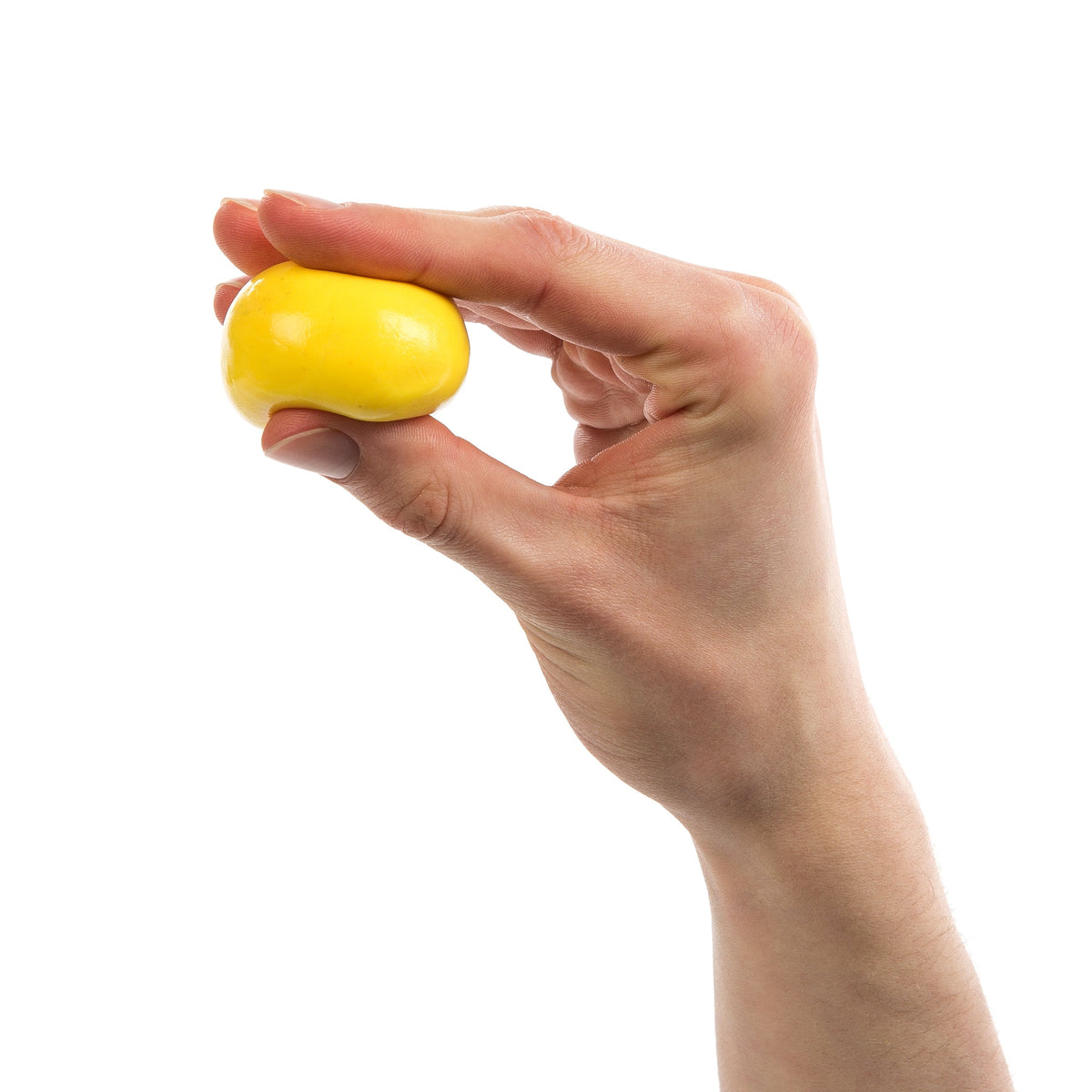
Grippers train your fingers curling in, but pinching (thumb versus fingers) and full-hand kneading target muscles the gripper barely touches. This is where hand therapy putty is genuinely brilliant: squeeze it, pinch it, roll it, spread it, all with zero setup while you watch something. It is also a lovely gentle option if your hands feel stiff.
- Full squeezes: 2 to 3 sets of 15 to 20, driving all five fingers into the putty.
- Pinches: 2 to 3 sets of 10 to 15 per finger against the thumb.
- Finger spread: wrap putty around your fingertips and open your hand against it, 2 sets of 15, to train the often-neglected opening muscles.

Squeeze, pinch and spread it anywhere. Comes in several resistances so you can progress.
£4.49, or £2.60 each in the Pack of 5 (£12.99)
Shop the putty
6. Wrist curls and reverse wrist curls (happy forearms)
Balanced forearms feel better and hold up longer. Resting your forearm on your thigh, curl a light weight up with your palm facing up (wrist curl), then repeat palm facing down (reverse wrist curl) to hit the other side.
- Reps and sets: 2 to 3 sets of 12 to 15 each direction.
- Load: light. Forearms respond to controlled reps, not ego weight.
Want the deeper dive on building the whole system? Our guide on how to build grip and hand strength walks through it step by step.
A simple weekly grip plan
You do not need a marathon session. Grip responds well to short, frequent work, and your forearms recover faster than big muscles, so a little and often beats one epic squeeze-fest. Here is a beginner-friendly week you can do at home in under 15 minutes a session.
| Day | Focus | The work |
|---|---|---|
| Monday | Crush and hold | Gripper: 3 x 10. Dead hangs: 3 x 20 to 30 sec. |
| Wednesday | Carry and pinch | Farmer's carries: 3 x 30 m. Putty pinches: 2 x 15 per finger. |
| Friday | Strength and balance | Gripper: 3 x 8 heavier. Wrist curls: 3 x 12 each way. Finger spread: 2 x 15. |
| Anytime | Easy volume | Foam gripper or putty, 2 to 3 casual sets while relaxing. |
The golden rules: leave at least a day between hard grip sessions, stop a set when your form gets sloppy rather than grinding out ugly reps, and progress something every couple of weeks. That "something" can be more resistance, more reps, longer holds or slower negatives. Do that and your grip will keep climbing.
Grab your grip kit
You genuinely don't need much. A way to progress the squeeze, a way to hold, and something for everyday reps. Here are two easy adds to round out the toolkit.

Three resistances for easy grip reps and hand relief between sessions.
£5.99
Shop the eggs
The core buy. Adjustable resistance means you can keep progressing for months.
£7.99
Shop the set
If you are building out a wider home setup, our honest take on whether resistance bands are worth it pairs nicely, and you can browse the full strength collection for the rest of your kit. A lacrosse ball is also a cheap way to roll out tired forearms after a heavy grip week.
FAQs
Do hand grippers actually build grip strength?
Yes, when you progress them. Hand grippers train your crush grip, and like any muscle, your hands and forearms get stronger when you make the work gradually harder. The people who say grippers do nothing are usually squeezing the same easy gripper forever. Add resistance, reps, holds or slow negatives over time and they work very well.
How often should I train grip strength?
Two to three focused sessions a week is plenty for most people, with at least a day of rest between hard sessions. Your forearms recover faster than big muscle groups, so you can also add easy, low-effort volume (a foam gripper or putty) on other days without overdoing it. Consistency matters far more than marathon sessions.
How many reps and sets should I do with a hand gripper?
A good default is 3 to 4 sets of 8 to 12 full, controlled closes per hand, finishing with one hard squeeze held for 5 to 10 seconds. Keep the reps clean rather than grinding out sloppy ones. When 12 reps feel easy, step up the resistance, add a set, or slow the release to keep challenging the muscle.
Are hand grippers or grip putty better?
They do slightly different jobs, so ideally use both. Grippers are best for building crushing power against firm resistance. Putty is brilliant for pinch strength, finger opening and easy everyday reps, and it is gentle enough to use daily. A gripper for strength plus putty for volume and variety covers your hands from every angle.
Can grip training help my other lifts?
Often, yes. Grip is frequently the first thing to fail on deadlifts, rows, pull-ups and heavy carries, so a stronger grip lets the target muscles do their job before your hands give out. Many people find their pulling numbers climb once grip stops being the weak link. Carries and dead hangs transfer especially well.
Is grip strength really linked to health?
Grip strength is one of the simplest useful markers of overall strength and healthy ageing. A large international study found lower grip strength was associated with a higher risk of early death and cardiovascular events. Grip itself is not the cause, it reflects your whole-body strength, so building it is part of staying strong and capable as you age.
The bottom line
Do hand grippers work? Genuinely, yes, as long as you treat them like training and keep nudging the difficulty up. Pair a gripper with a couple of holds, some carries and a bit of pinch work, sprinkle in easy putty reps, and you have a complete grip programme that costs very little and takes minutes. Your handshake, your lifts and your future self will all thank you. Now go and win that jar lid.
One friendly note: this is general fitness guidance, not medical advice. If you have a hand, wrist or forearm injury, ongoing pain, or a health condition, check with a qualified professional before starting new grip strength exercises, and stop anything that hurts.
Share:
Best Yoga Mat for Hot Yoga UK 2026: Grip That Survives the Sweat
Best Fabric Resistance Bands (Booty Bands) for 2026