Choosing the right pilates ball for pregnancy matters more than most UK pregnant women realise — a cheap, non-anti-burst ball can deflate suddenly under load, and many NHS maternity wards now refuse balls that arrive in hospital bags without a clear anti-burst rating. This 2026 guide ranks the safest birth balls for UK mums-to-be, with midwife-aligned sizing, a trimester-by-trimester routine, and a featured pick from flexa.fit that has become a staple in NCT and antenatal class kit lists.
QUICK ANSWER
For most UK pregnant women between 5'4" and 6'0" (162–183 cm) the best pilates ball for pregnancy is the flexa.fit Anti-Burst Gym Ball in 65 cm — anti-burst PVC, 300 kg static load, textured non-slip surface, and a hand pump included so you can inflate it the night before your due date. Petite mums under 5'4" should size down to 55 cm; mums over 6'0" (or twin pregnancies in the third trimester) should size up to 75 cm.
Safety first
Only use an anti-burst birth ball in pregnancy — one that deflates slowly if punctured rather than popping. Speak to your midwife or GP before starting any new exercise, especially if you have placenta praevia, a high-risk pregnancy, or a history of pelvic instability (SPD/PGP).
Why a pilates ball for pregnancy helps
A pilates ball — often sold as a birth ball, exercise ball, or Swiss ball when used at this size — gives expectant mums four things a chair simply cannot: an unstable surface that reactivates deep core and pelvic-floor muscles, a hip-opening seated position that takes pressure off the lumbar spine, a low-impact mobility tool for the second and third trimester, and a labour aid in active first-stage contractions. The NHS labour and birth pages note that staying upright and mobile can help labour progress, and the NCT labour and birth guidance recommends starting to use a ball from around 28–32 weeks so you are comfortable on it by the time labour begins.
The most common reasons UK pregnant women buy a ball are: (1) relieving lower-back pain — bouncing gently and rocking the hips decompresses the lumbar spine and is the single biggest reason for purchase in the third trimester; (2) opening the hips and helping baby into an optimal position for labour (sitting on a ball naturally tilts the pelvis forward, which is what midwives and NCT antenatal teachers describe as "forward-leaning inclined"); (3) gentle core and pelvic-floor work in line with the RCOG patient information on physical activity in pregnancy; and (4) replacing a slumped office chair during the 2nd trimester desk-job slump — a use case also covered in our pilates ball vs desk chair comparison.
Birth ball safety: what to look for in pregnancy
Not every "exercise ball" on Amazon or eBay is safe to use in pregnancy. Five things to check before you buy:
- Anti-burst rating — the ball should be labelled anti-burst or slow-deflate and ideally meet a recognised standard (BS EN ISO 20957-9 for stationary training equipment / EN 957). A non-anti-burst ball can rupture suddenly under a 70–90 kg load with bump weight added.
- Static load rating — look for at least 300 kg static load. This is the weight the ball can support sitting still; dynamic (bouncing) ratings are lower but 300 kg static is the UK midwifery rule of thumb.
- Textured non-slip surface — pregnant skin sweats more easily and hospital floors are smooth lino. A textured PVC surface stops you sliding mid-contraction.
- Pump included — most mums inflate the ball at 36–37 weeks alongside packing the hospital bag. A ball that arrives without a pump is almost always re-ordered with one.
- Hygiene — choose a ball you can wipe down with antibacterial spray. Many trusts require the ball to be wiped before it goes into the labour-ward room.
Hospital bag note
Many UK trusts (including parts of NHS Greater Manchester, NHS Bristol, and several London trusts) will refuse non-anti-burst balls brought from home, and some will not supply one on the ward. Check with your midwife at your 34–36 week appointment, and bring proof of the anti-burst rating on the box if your trust requires it.
Top pilates balls for pregnancy UK 2026

Anti-Burst Gym Ball 65cm — flexa.fit
Anti-burst PVC, 300 kg+ static load, textured non-slip surface, hand pump included. Sizing covers 5'0"–6'1"+ across 45/55/65/75 cm — the 65 cm fits most UK mums-to-be. Inflate to ~90% so it gives slightly under the bump.
£7.99

Pilates Ball 18cm — flexa.fit
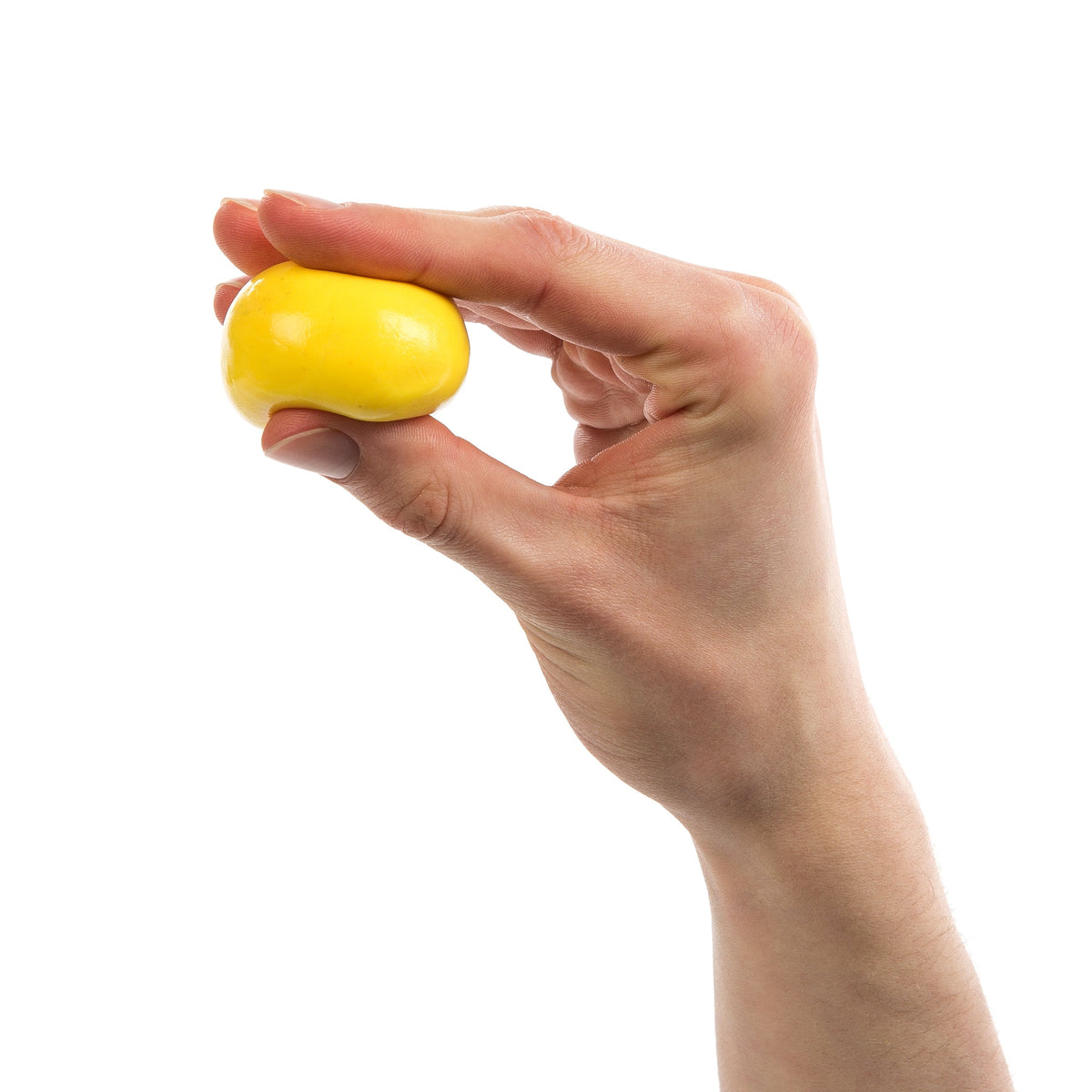
The small soft companion ball. Sits between the knees for inner-thigh and pelvic-floor work, behind the lower back for support in seated stretches, and under the chest for gentle thoracic mobility. Especially useful postpartum.
£2.99
Trideer exercise ball birthing ball
Popular Amazon UK pick. Anti-burst rated to ~300 kg, includes pump, 45/55/65/75 cm sizes. Sold as a generic exercise ball rather than a maternity-first ball — the pump quality is the most common complaint.
~£15–£25
ProBody Birthing Ball
Marketed directly at pregnancy with a birth-ball-specific exercise guide. Anti-burst, two-pump system, 55/65/75 cm. Pricier than mainstream picks and stocks sell out around NCT class season.
~£25
Birth-EASE Pregnancy Ball
UK doula-favourite. Anti-burst with a printed sizing guide on the box. Slightly tackier surface that grips well on hospital floors. Limited size choice (65 cm only) which suits 5'5"–5'10" mums.
~£22
Eono Exercise Ball
Amazon-exclusive UK brand. Anti-burst rated, 55/65/75 cm, pump included. A no-frills budget option — fine for general pregnancy use but the pump is hand-only and slow to inflate.
~£13–£18
Birth ball sizing by height — UK guide
| Your height | Recommended ball size | Notes |
|---|---|---|
| Under 5'0" (152 cm) | 45 cm | Feet should sit flat with knees just below hip height. Petite frame. |
| 5'0"–5'5" (152–165 cm) | 55 cm | The right size for most short and average-height UK women in 2nd trimester. |
| 5'6"–6'0" (168–183 cm) | 65 cm | Most-bought size for UK pregnancy. Hips slightly above knees — ideal for labour positions. |
| 6'1" and above (185 cm+) | 75 cm | Also size up to 75 cm if you are carrying twins in the third trimester, or if your bump touches the floor when seated on a 65 cm. |
Midwife Tip
If your bump touches the floor when you sit on the ball, size up. Your hips should sit slightly above your knees — never below — to keep the pelvic outlet open and the lower back unloaded.
Comparison table: pregnancy pilates balls UK 2026
| Ball | Size options | Max load | Anti-burst | Pump | Price |
|---|---|---|---|---|---|
| flexa.fit Anti-Burst Gym Ball | 45/55/65/75 cm | 300 kg+ | Yes | Included | £9.99 |
| flexa.fit Pilates Ball 18 cm | 18 cm | n/a (small) | Yes | Straw inflate | £5.99 |
| Trideer Birthing Ball | 45/55/65/75 cm | 300 kg | Yes | Included | £15–£25 |
| ProBody Birthing Ball | 55/65/75 cm | 300 kg | Yes | Included | £25 |
| Birth-EASE Pregnancy Ball | 65 cm | 300 kg | Yes | Included | £22 |
| Eono Exercise Ball | 55/65/75 cm | 250 kg | Yes | Included (slow) | £13–£18 |
Your pregnancy birth-ball routine: trimester by trimester
The routine below is aligned with the RCOG patient information on recreational exercise and pregnancy, NHS exercise in pregnancy advice, and Tommy's exercise in pregnancy guidance. Aim for 10–15 minutes a day from week 28 onwards; stop immediately and call your midwife if you feel dizzy, breathless beyond the normal level, or notice any bleeding or reduced foetal movements.
2nd trimester (weeks 14–27): build the habit
Seated hip circles
Sit tall, feet shoulder-width on the floor, hands resting on bump or thighs. Circle the hips slowly clockwise for 10 reps, then anti-clockwise. Two sets. Releases low-back tension and rehearses the pelvic mobility used in labour.
Gentle bounces
Light, controlled bounces — feet stay on the floor. 30 seconds, rest, repeat 3 times. Re-engages the pelvic floor (a small lift on each up-bounce) and is the lowest-impact cardio you can do safely.
Supported wall squat
Ball pinned between your lower back and a wall. Slowly squat to a comfortable depth (knees over toes, never deeper than parallel) for 5 reps. Builds the leg strength you'll rely on for upright labour positions.
Desk-chair swap
Replace your office chair with the ball for 20-minute blocks (max 2 hours a day, broken up). Keeps the spine in neutral, eases the 2nd-trimester slump, and recruits transverse abdominis without crunching. See our pilates ball vs desk chair guide for the full posture comparison.
3rd trimester (weeks 28–40): rehearse labour
Forward-leaning rest
Kneel on a mat with the ball in front of you. Drape arms and head over the ball. Stay for 1–3 minutes. Encourages baby into an anterior position, takes weight off the pubic symphysis, and is a position you can return to in active labour.
Figure-8 hips
Seated, trace a slow figure-of-8 with the hips. 8 reps each direction. The NCT-favourite cue for opening the pelvis through both inlet and outlet — exactly what you'll do between contractions on the ward.
Active-labour bouncing + sway
During early labour at home, sit on the ball and combine gentle bounces with side-to-side sway. The rhythm self-regulates the breath and the unstable surface releases the sacrum — both shown in the NCT labour and birth guidance to help cope with contractions.
Midwife Tip
Test your ball's air retention 24 hours before your due date. A small slow leak you didn't notice in week 30 will be obvious overnight in week 40 — and you don't want to discover it the moment your waters break.
Postpartum (week 6 onwards, after GP sign-off): gentle return
Pelvic-floor bounces with 18 cm ball
Sit on the 65 cm ball with the small 18 cm flexa.fit Pilates Ball between the knees. Gently squeeze the small ball as you lift the pelvic floor on the bounce up. 10 reps, 2 sets. The single best post-natal reactivation drill.
Cat-cow over the ball
Forearms on the big ball, knees on the floor. Slow cat-cow rocks for 8 reps. Mobilises the thoracic spine after weeks of feeding posture and is the first "real" pilates move most physiotherapists will clear you to do.
Full return-to-exercise progression
From around week 12 postpartum (later for C-section recovery), step up to a fuller programme. Our how to return to exercise after pregnancy safely guide maps the full 12-week progression alongside diastasis recti checks.
MUM-TO-BE OFFER
Get 10% off your first order
Join thousands of UK mums-to-be using flexa.fit. Sign up for pregnancy-safe workout tips, hospital-bag essentials, and a 10% discount sent straight to your inbox.
No spam, unsubscribe any time. UK customers only.
What UK mums-to-be are using birth balls for
Sarah, 32 weeks, desk job in Manchester (first-time mum). Sciatica flared at 26 weeks from long days at the kitchen-table desk. Swapped her chair for a 65 cm anti-burst ball for 20-minute blocks and added evening hip circles. Reports the lower-back ache dropped from a 7/10 to a 3/10 within two weeks — the change she could feel most was on the school-run walk afterwards.
Priya, second baby, planning a home birth in Bristol. Her doula recommended starting the ball at 28 weeks for active-labour rehearsal. Uses the figure-8 hip drill twice daily and the forward-leaning rest position before bed. The ball travels with her to the home-birth pool setup as a between-contractions seat.
Emma, 28 weeks, recovering from hyperemesis gravidarum (HG). After 22 weeks of severe nausea kept her sedentary, she needed a way back into movement that didn't trigger reflux. Seated bouncing for 5 minutes a day was her first "exercise" back — slowly building to the full 2nd-trimester routine above.
Leila, twins pregnancy at 34 weeks, near Reading. Sized up to the 75 cm ball at 30 weeks when her 65 cm started feeling low under the double bump. Uses the forward-leaning rest position with the ball for SPD relief and sleeps better the nights she does 10 minutes of figure-8s before bed.
FAQs
What size pilates ball do I need for pregnancy?
For most UK pregnant women between 5'6" and 6'0" (168–183 cm), a 65 cm anti-burst ball is the right size. Under 5'5" — go to 55 cm. Over 6'0", carrying twins, or finding the bump touches the floor when seated — size up to 75 cm. The rule is hips slightly above knees, feet flat on the floor.
Is a pilates ball safe in the third trimester?
Yes, an anti-burst ball used at the recommended size is safe throughout the third trimester for low-risk pregnancies, and is actively recommended by NCT and many NHS antenatal teams from around 28 weeks. Avoid if you have placenta praevia, severe SPD/PGP without physiotherapy guidance, or any condition for which your midwife has advised bed rest.
Can I use a pilates ball during labour?
Yes — birth balls are a mainstream UK labour aid. Sitting, bouncing, swaying, and forward-leaning over the ball are all positions actively encouraged by midwives to help labour progress and manage contractions, as covered in the NCT labour and birth guidance. Check with your trust whether they supply one or if you should bring your own.
How much weight can a birth ball hold?
A proper anti-burst birth ball — including the flexa.fit Anti-Burst Gym Ball — is rated to at least 300 kg of static load. This covers any UK pregnancy weight comfortably. Cheap non-anti-burst balls (often unbranded eBay or wish.com listings) may have no rated load and can fail under labour positions — avoid.
Do UK hospitals provide birth balls or should I bring my own?
It varies by trust. Larger units in Manchester, Birmingham, Bristol, and many London trusts have ball-equipped delivery rooms, but availability is not guaranteed during busy shifts. Many midwives recommend bringing your own anti-burst ball as part of the hospital bag — confirm at your 34–36 week appointment whether your trust accepts external balls and whether proof of the anti-burst rating is required.
What's the difference between a pilates ball and a birth ball?
Functionally the same product — both terms describe a 55–75 cm inflatable PVC exercise ball. The terminology shifts based on use: birth ball is the labour-and-pregnancy positioning; pilates ball (or Swiss ball / exercise ball / fitball) is the general training term. A small 18 cm soft pilates ball is a separate product used between the knees and behind the back — useful in pregnancy but not interchangeable with a 65 cm birth ball.
When in pregnancy should I start using a ball?
From around 14–16 weeks for desk-job posture and core engagement once early-pregnancy fatigue eases, and from 28 weeks for the labour-prep routine — that gives you 12 weeks to build comfort with the ball before active labour. Tommy's pregnancy charity and the NCT both endorse this 28-week starting window.
Final verdict
The best pilates ball for pregnancy in the UK in 2026 is the flexa.fit Anti-Burst Gym Ball in 65 cm for most mums (sizing down to 55 cm for under-5'5" and up to 75 cm for tall mums or twin pregnancies). Anti-burst PVC, 300 kg+ static load, textured non-slip, pump included, £9.99 — and at that price you can pair it with the small 18 cm flexa.fit Pilates Ball for postpartum pelvic-floor work and still come in under £16 for the full pregnancy-to-postpartum kit.
Medical disclaimer. This article is for general information and is not medical advice. Speak to your midwife or GP before starting any exercise in pregnancy, especially if you have a high-risk pregnancy or any condition such as placenta praevia, pre-eclampsia, severe SPD/PGP, a history of preterm labour, or any cardiac, respiratory, or musculoskeletal condition affecting exercise tolerance. Stop immediately and seek urgent medical advice if you experience bleeding, leaking fluid, persistent dizziness, chest pain, painful contractions, or reduced foetal movements. UK readers can use the NHS find a service tool or call 111 out of hours.
Share:
How to Fix a Slippery Yoga Mat: Complete 2026 Guide
Best Yoga Mats for Yoga Teachers UK 2026: Studio-Grade Picks That Last