
Choosing hand therapy putty for climbers is a different brief from picking a generic grip trainer — UK climbers and boulderers need a tool that supports A2 pulley rehab when something tweaks on a crimp, builds off-wall finger flexor strength without overcooking already-fatigued tendons, and packs into a chalk bag for between-sessions micro-doses. This 2026 guide ranks the best hand therapy putty and grip tools for UK climbers — indoor wall regulars at The Castle, The Arch, Mile End, Boulders, Climbing Hangar and Depot, plus outdoor trad and sport climbers in the Peak, the Lakes, North Wales and Pembroke — with flexa.fit's graded putty featured alongside four climber-popular competitors.
QUICK ANSWER
The best hand therapy putty for UK climbers in 2026 is the flexa.fit Hand Therapy Putty — a reusable, portable putty with graded resistance that supports A2 pulley rehab, off-wall finger flexor work and grip prehab between climbing sessions. Pair it with the flexa.fit Hand Exercise Stress Relief Massage Eggs (set of 3) for active recovery on rest days and easy desk-break squeeze sessions.
8
Pulleys per climbing finger
30%
Climbers report A2 pulley injury
3–6
Months avg pulley healing
5
Putty resistance levels for graded rehab
CLIMBING · UK
Stronger fingers between sends. Faster rehab when you tweak something.
A few minutes of intentional putty work between climbing sessions is the cheapest, lowest-friction way to protect your A2 pulleys, build off-wall grip and bounce back when a crimp goes wrong.
CH 01 · WHY IT MATTERS
Why climbers can't ignore finger conditioning
The climber's finger is a tiny architectural marvel under massive load. Each digit has eight pulleys — five annular (A1–A5) and three cruciate (C1–C3) — that hold the flexor tendons against the bone so they don't bowstring forward when you crimp. The A2 pulley, sitting at the proximal phalanx, takes the brunt of half-crimp and full-crimp loading. A British Mountaineering Council safety roundup and multiple peer-reviewed climbing-injury studies place A2 pulley strains among the most common climbing injuries — surveys consistently report that around a quarter to a third of regular climbers will deal with at least a grade-I A2 strain in their climbing life.
The problem is that climbing itself is a terrible rehab tool. Once you've tweaked a finger, pulling on holds — even easy ones — keeps reloading the exact tissue that needs offloading, and the brain compensates by recruiting the wrong muscles. Open-hand grip strain is a different beast again: lumbrical tears from monos and pockets, FDP overload from open-hand training, and capsular irritation from gaston and pinch positions. Isolated, graded resistance work outside the wall lets you load the flexors in a tendon-friendly way, build eccentric strength on the way down, and progress at 5% increments rather than the all-or-nothing jumps you get on a hangboard.
That's where hand therapy putty earns its place in the kit. Unlike a hangboard — which is brilliant for max-strength but unforgiving when you're injured — putty lets you flex, extend, abduct and oppose the fingers across a full range of resistance, with no leverage spike at end-range and no risk of falling off a hold. It bridges the gap between "I'll just climb more" and "I should probably hangboard", and it's the one piece of grip kit that works equally well for acute pulley rehab, mid-recovery loading, and off-wall prehab on a normal training week.
PHYSIO TIP
If you felt a pop, can't fully bend the finger, or see swelling and bruising around the proximal phalanx — that's not a putty job. Get a same-week assessment from a sports physio or a BMC-listed climbing-specialist physio before self-rehabbing. Graded loading only works once a diagnosis rules out a grade-III rupture.
CH 02 · THE RANKED PICKS
Top hand therapy putty for climbers and grip tools UK 2026

flexa.fit Hand Therapy Putty
Reusable, portable putty designed for graded finger and grip work. Brilliant for A2 pulley rehab, off-wall flexor strength and prehab between sessions. Compact enough to live in a chalk bag, durable enough for daily use, and easy to shape into pinch, crimp and open-hand drills.
From £4.49

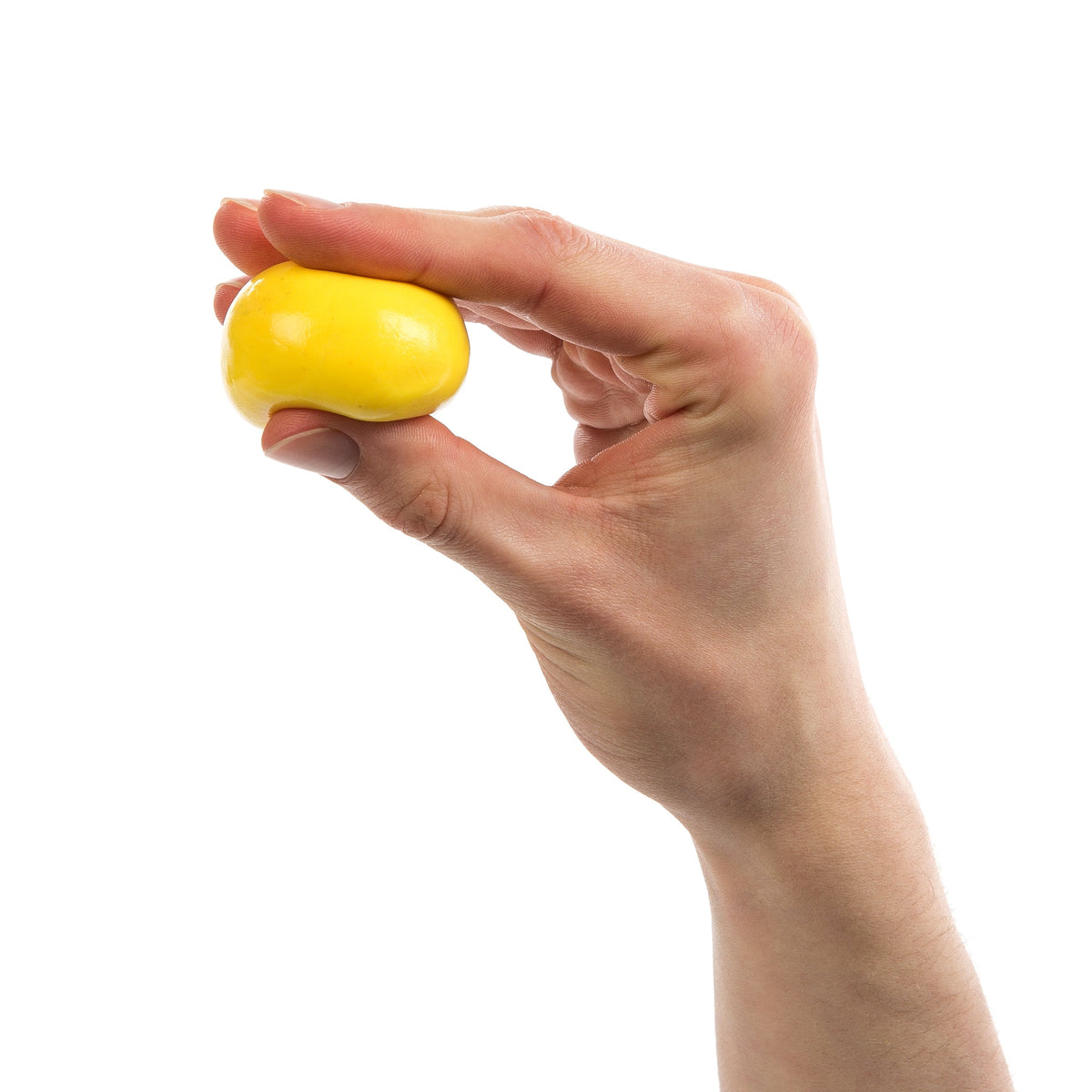
Flexa.fit hand exercise stress relief massage eggs (set of 3)
Three eggs in graded resistances. The shape sits cleanly in the palm for finger-flexion squeezes, lumbrical work and full-hand crush drills. Ideal on rest days, in the car park between routes at the Peak, or as a desk-break tool the day after a hard bouldering session.
£7.99
Theraputty (Sammons Preston)
The clinical original. Six colour-coded resistances (xx-soft to xx-firm), widely prescribed in UK hand-therapy clinics. Excellent if you want the exact putty your physio is using — but UK pricing is on the high side for the small-tub format.
From £8–£20
Tetra Grip Trainer
Climber-favourite four-finger isolation tool with adjustable spring tension. Brilliant for crimp-position strength work once you're past acute rehab — but it can't deliver the gentle, graded loading that putty offers in the first six weeks after a pulley strain.
From £20–£30
GripPro Trainer
Individual-finger button trainer in three resistances. Great for extensor work and finger isolation drills, particularly thumb opposition. Limited for active rehab — the buttons load at end-range, which is exactly where a healing A2 doesn't want load.
£15
Powerball Gyro
Gyroscopic forearm and wrist trainer popular with climbers for antagonist work — fantastic for forearm flexor/extensor balance and wrist pre-hab. Not designed for finger-isolated putty-style loading. A complement, not a replacement.
From £20–£40
Hand therapy putty and grip tools for climbers compared (UK, 2026)
| Tool | Resistance levels | Material | Portability | Rehab vs strength | Price | Best for |
|---|---|---|---|---|---|---|
| flexa.fit Hand Therapy Putty | Graded (multi-resistance) | Silicone-style putty | Chalk-bag size | Both, rehab-led | £4.49 | A2 rehab, daily prehab |
| flexa.fit Massage Eggs (×3) | 3 graded eggs | Soft polymer | Pocket-size | Active recovery | £7.99 | Rest-day grip, desk breaks |
| Theraputty | 6 colour-coded | Clinical putty | Tub format | Both | £8–£20 | Physio-prescribed rehab |
| Tetra Grip Trainer | Adjustable spring | Plastic + springs | Bag-size | Strength only | £20–£30 | Crimp strength, return-to-climb |
| GripPro Trainer | 3 levels | Buttons + base | Pocket-size | Strength | £15 | Finger isolation, extensors |
| Powerball Gyro | RPM-driven | Polycarb gyro | Tennis-ball size | Antagonist work | £20–£40 | Wrist + forearm prehab |
Putty wins on graded loading — you can adjust resistance by 5% just by changing how much you pinch off.
CH 03 · PROGRESSION
Progression: from finger injury rehab to off-wall grip strength
A typical pulley-rehab arc runs four phases. Putty maps neatly onto each one. Move up a phase only when the current load is pain-free, both during and 24 hours after.
Phase 1 — Acute rehab (weeks 0–2)
Lightest putty resistance only. Pain-free isolated finger flexion, 30–40 reps per finger, twice daily. The goal isn't strength — it's nudging blood flow through the injured pulley sheath and reminding the flexors how to fire without recruitment compensation. No crimp positions, no full-hand grip work yet.
Phase 2 — Mid-rehab (weeks 2–6)
Step up to medium resistance. Introduce open-hand and half-crimp positions, but still on putty, not on a wall. 3 sets of 8–12 reps, every other day. Add eccentric finger curls (resist on the way out) — eccentric loading is the strongest stimulus for tendon-sheath remodelling in the latest Lattice Training and Hooper's Beta rehab protocols.
Phase 3 — Return-to-climbing prehab (weeks 6–12)
Heaviest putty resistance, taped finger on the wall, easy juggy routes only. Putty work becomes prehab — 5–10 minutes pre-session as a warm-up, focused on full-hand crush, pinch and thumb opposition. The aim is to arrive at the wall with warm, well-perfused fingers rather than cold ones expecting to crimp on V4.
Phase 4 — Off-day grip strength (ongoing)
Once you're climbing pain-free, putty becomes off-wall accessory work. 5 minutes on rest days for finger spread, opposition and lumbrical engagement. The point isn't max strength — that's what your hangboard is for — it's keeping the antagonists and intrinsics balanced so the next crimp injury doesn't happen.
"Most climbers think their finger injury is over the moment the sharp pain goes away. It isn't. Pulleys remodel for months, and the period between weeks four and twelve — where graded, pain-free loading happens — is what determines whether you return to your previous grade or end up in a chronic-tweak loop."
CH 04 · THE EXERCISES
How to use putty for climbing: 5 essential exercises
Five drills covering flexion, extension, pinch, intrinsic isolation and opposition — the full set a climber needs to build balanced finger function. Run through them as a 5–8 minute warm-up before climbing, or as a stand-alone session on a rest day.
Finger spread (extensor balance)
Sets/reps: 3 × 12. How: Roll the putty into a ball, wrap your fingers around it, then extend the fingers outward against the resistance. Cue: "Push the air outwards" — focus on full extension at the DIP joint. This is the antagonist drill climbers skip and end up paying for in elbow tendinopathy six months later.
Power crush (full-hand flexion)
Sets/reps: 3 × 10. How: Putty in palm, squeeze with all four fingers and thumb into the heel of the hand. Hold the contraction for 3 seconds, release slowly over 3 seconds. Cue: "Squeeze, hold, melt." Eccentric phase is where the strength gain happens — don't rush it.
Pinch (thumb-to-fingers)
Sets/reps: 3 × 12 each hand. How: Flatten putty into a thick disc, pinch between thumb and four fingers, hold 3 seconds. Cue: Keep the thumb pad opposed rather than slipping to the side. Direct carry-over to gaston, pinch and sloper holds.
Index extension (single-finger isolation)
Sets/reps: 3 × 10 per finger. How: Wrap a thin strip of putty over the back of one finger and the thumb. Extend the finger against the band of putty. Cue: Slow, isolated, no compensation from the wrist. Hits the extensor digitorum directly — the antagonist most climbers under-train.
Thumb opposition (intrinsics)
Sets/reps: 3 × 10 per hand. How: Press a small ball of putty between the thumb pad and each fingertip in turn, holding 2 seconds. Cue: "Touch each finger like you mean it." Builds the intrinsic hand muscles that stabilise crimp positions — vital for boulderers working two-finger pockets and small edges.
5 minutes a day beats 30 minutes once a week — make it a coffee-break habit.
COACH'S TIP
Warm putty is softer putty. If you're rehabbing in a cold UK garage in winter, cup the putty in your hands for 30 seconds before you start — cold putty defaults to its firmest setting and you'll under-rep without realising.
CLIMBER OFFER
Get 10% off your grip kit
Join UK climbers using flexa.fit. Sign up for finger-strength protocols, pulley-rehab guides, and a 10% discount sent to your inbox.
No spam, unsubscribe any time. UK customers only.
CH 05 · IN PRACTICE
How UK climbers train fingers off the wall
Four composite scenarios drawn from the most common cases in UK climbing forums and physio practices:
V6 boulderer at The Arch managing A2 strain
A regular boulderer climbing four sessions a week at The Arch in Bermondsey feels a sharp twinge on a left-hand crimp on a V6 problem. No pop, but the finger swells slightly overnight. After a physio rules out a grade-II tear, the rehab plan is two weeks of acute-phase putty work (lightest resistance, isolated middle-finger flexion, 30 reps twice daily), no climbing. Week three reintroduces medium-resistance putty plus easy V0–V2 jug climbing only. By week eight they're back on V4 with tape on the finger and 10 minutes of putty prehab pre-session. Total layoff from the grade: six weeks instead of the four-month chronic-tweak cycle most climbers fall into.
Trad climber from Lake District prepping for grit season
A Lakes-based trad climber heading down to the Peak for a spring grit campaign uses putty as off-wall conditioning across winter. Three 10-minute putty sessions a week through January and February — power crush, pinch and thumb opposition — to keep finger flexors and intrinsics ticking over without the joint stress of repeat hangboard sessions in cold weather. Arrives in the Peak in March with fingers more pliable than the average climber who's been hammering a hangboard in a freezing garage.
First-year V4 climber at Mile End building base strength
A relatively new boulderer at Mile End — two sessions a week, just broken into V4 — uses the flexa.fit Massage Eggs at their desk job for daily 2-minute squeeze sessions. The aim isn't max strength yet (their pulleys haven't adapted enough for hangboarding); it's gentle, repeated finger activation through the day. Result: noticeably less stiffness on Wednesday-night sessions following Monday-night ones, and a base of finger conditioning that lets them start hangboarding safely after their first 12 months of climbing.
Comp climber rehabbing from lumbrical pull
A regional youth-comp boulderer pulls a lumbrical on a two-finger pocket at a Climbing Hangar comp. Lumbrical injuries respond particularly well to graded putty work because the muscle sits between the metacarpals and is hard to load without putty's controlled grip variations. The rehab plan: lightest putty resistance, isolated two-finger flexion drills six weeks, building to mixed-finger drills mimicking the pocket positions that caused the injury. Putty here outperforms a hangboard — pockets on a hangboard can't be loaded in the millimetre-precise way putty allows.
PHYSIO TIP
Two-finger pocket pulls almost always involve lumbricals before they involve pulleys. If pain is mid-palm rather than on the proximal phalanx, suspect lumbrical first and load it with isolated two-finger putty flexion before climbing pockets again.
COACH'S TIP
Never skip the antagonist work. Climbers train flexion 99% of the time on the wall — finger spread and index extension on putty are non-negotiable if you want to climb into your fifties.
CH 06 · FAQS
FAQs
What is hand therapy putty used for?
Hand therapy putty is a malleable resistance medium used to strengthen and rehabilitate the small muscles of the hand, fingers and forearm. Climbers use it to load finger flexors and extensors through a full range of motion, support A2 pulley rehab after a crimp injury, train intrinsic hand muscles for grip-position control, and bridge the gap between acute injury and a return to climbing. It's also a popular prehab tool — five minutes a day keeps the antagonist muscles balanced and the flexors warm before a climbing session.
Does putty help with climber's finger injuries?
Yes — particularly in the mid-rehab phase. After a pulley or lumbrical injury, you need pain-free graded loading to remodel the injured tissue. Climbing on easy holds is too unpredictable; hangboarding too binary; putty sits in the sweet spot, letting you load at exactly the right level and increase by 5% at a time. The BMC's injury-management guidance and most UK climbing-specialist physios prescribe putty as a standard part of the rehab toolkit from week two onwards.
Which resistance putty is best for climbers?
It depends on your phase. In acute rehab (weeks 0–2), use the lightest resistance — the goal is movement, not load. In mid-rehab (weeks 2–6), step up to medium. From week six onwards, including off-wall prehab and accessory work, use the firmer resistance and progress as it feels easy. Most climbers benefit from owning at least two grades so they can match resistance to context, which is why graded-resistance putty wins over single-strength options.
How often should I use hand therapy putty?
For rehab: twice daily, 5–10 minutes, every day for the first six weeks. For prehab/maintenance: 5 minutes pre-climbing as part of a warm-up, plus 10 minutes on one rest day per week. More isn't better — finger tendons remodel slowly and you can't out-volume biology. Consistency beats heroic single sessions.
Can I climb with an A2 pulley injury?
Not for the first two weeks of a grade-I or grade-II strain, and not at all without a sports-physio diagnosis. After week two, easy jug climbing with the affected finger taped can be reintroduced — strictly no crimping, no campusing, no full-hand pulling on small edges. By week six, light bouldering up to two grades below your previous max is usually fine. Avoid hangboards until at least week eight, and only with a physio's sign-off. A grade-III rupture is surgical territory and needs immediate referral.
What's better for climbers — putty or grip trainer?
They do different jobs. Putty is unbeatable for rehab, prehab, intrinsic work and antagonist balance because it loads through a full range with no end-range spike. A spring-loaded grip trainer like the Tetra is better for max-effort crimp-position strength once you're past acute rehab and into a strength-build cycle. Most committed UK climbers own both — putty for daily micro-doses, a grip trainer for one or two focused strength sessions a week.
How long does it take to build finger strength?
Neural adaptations show in 2–4 weeks (early gains feel fast). Genuine tendon-and-pulley strength adaptations take 3–6 months of consistent loading, which is why putty's value shows in month two and three, not week one. Lattice Training's published data on finger strength progression shows most climbers see roughly 5–10% gain in measured finger force per training block, given consistent inputs across putty, hangboard and on-wall work.
Final verdict
For UK climbers and boulderers in 2026, the flexa.fit Hand Therapy Putty is the most useful single tool you can put in your chalk bag — graded, portable, pain-free, and exactly what your fingers need in the gap between an acute crimp injury and a return to your previous grade. Pair it with the flexa.fit Hand Exercise Stress Relief Massage Eggs for active recovery, follow a phased loading plan, and your fingers will thank you for the next decade of climbing.
Shop flexa.fit Hand Therapy Putty
MEDICAL DISCLAIMER
This guide is educational and not a substitute for individualised medical care. Any acute finger injury — a sudden pop, visible swelling, bruising, an inability to bear load, or pain that persists beyond 48 hours of rest — needs assessment by a sports physiotherapist or a BMC-listed climbing-specialist physio before you self-rehabilitate. Graded loading protocols only work once a clinician has ruled out a grade-III pulley rupture, lumbrical avulsion or volar plate injury. If in doubt, get it looked at.
For further reading, see our companion guides on the best foam roller for marathon runners UK 2026, resistance bands for personal trainers UK 2026, kinesiology tape for rugby players UK 2026, and best resistance bands for men 2026. Browse the flexa.fit Hand Therapy Putty and Hand Exercise Massage Eggs product pages for spec, sizing and bulk-buy enquiries. For external evidence and protocols, see the British Mountaineering Council injury library, UKClimbing.com training articles, Lattice Training's open finger-strength research, the Hooper's Beta pulley-rehab series, and the peer-reviewed paper "Hand and finger injuries in rock climbers" (PubMed review).

Share:
Best Massage Oil for Sports Massage Therapists UK 2026: Clinic-Grade Picks
How Long Does a Yoga Mat Last? Lifespan by Material and Use (2026)